

The Latin American medical device market stands on the verge of a significant transformation, driven by an aging population and rising healthcare investments. With projections estimating this sector will reach approximately USD 75.30 billion by 2033, it’s crucial for companies to understand the complexities of this diverse landscape to succeed. However, the path is fraught with challenges, particularly in navigating regulatory compliance and local market dynamics.
How can businesses effectively tailor their strategies to capitalize on opportunities while overcoming these hurdles in such a rapidly evolving environment?
According to the latin america medical device market analysis, the medical equipment sector is poised for remarkable growth, with projections indicating it could reach approximately USD 75.30 billion by 2033. This expansion is driven by several pivotal factors:
As healthcare spending in the region escalates - bolstered by both public and private investments - the competition within the Latin America medical device market analysis intensifies. Key players include a mix of local manufacturers and global corporations, all vying for market share in a diverse environment.
However, regional disparities in healthcare infrastructure and purchasing power necessitate tailored strategies for various countries across Latin America. Brazil and Mexico emerge as the largest economies, while nations like Chile are recognized for their effective governance. Companies aiming for successful entry into this industry must conduct a latin america medical device market analysis to identify specific opportunities and challenges unique to each target market. This approach not only aids in navigating the complexities of compliance but also enhances the chances of successful product adoption and improved patient outcomes.

Regulatory compliance is essential for medical instrument companies looking to perform a Latin America medical device market analysis before entering the market. Each country operates under its own governing body - ANVISA in Brazil and COFEPRIS in Mexico - each enforcing distinct standards for device registration and approval. Recent developments indicate a significant shift towards standardization across the region, which is poised to streamline the approval process. Companies must remain vigilant regarding compliance changes, including new pathways for expedited approvals introduced by RDC 751/2022 in Brazil, aligning more closely with European standards.
Engaging local regulatory consultants can provide critical insights and facilitate smoother navigation through the complex regulatory landscape. bioaccess® offers a comprehensive process that encompasses:
Additionally, bioaccess® manages trial set-up, start-up, and approval processes, including ethics committee and health ministry approvals, import permits, and nationalization of investigational devices.
Reporting on study status, inventory, and both serious and non-serious adverse events is also part of the service, ensuring thorough oversight throughout the trial. Utilizing resources from established organizations such as Emergo by UL can enhance understanding of specific industry requirements, ultimately aiding successful market entry. Notably, the Latin America medical device market analysis indicates that Latin America represented 3.9% of the global compliance affairs sector in 2023, underscoring the critical importance of regulatory compliance in the region.

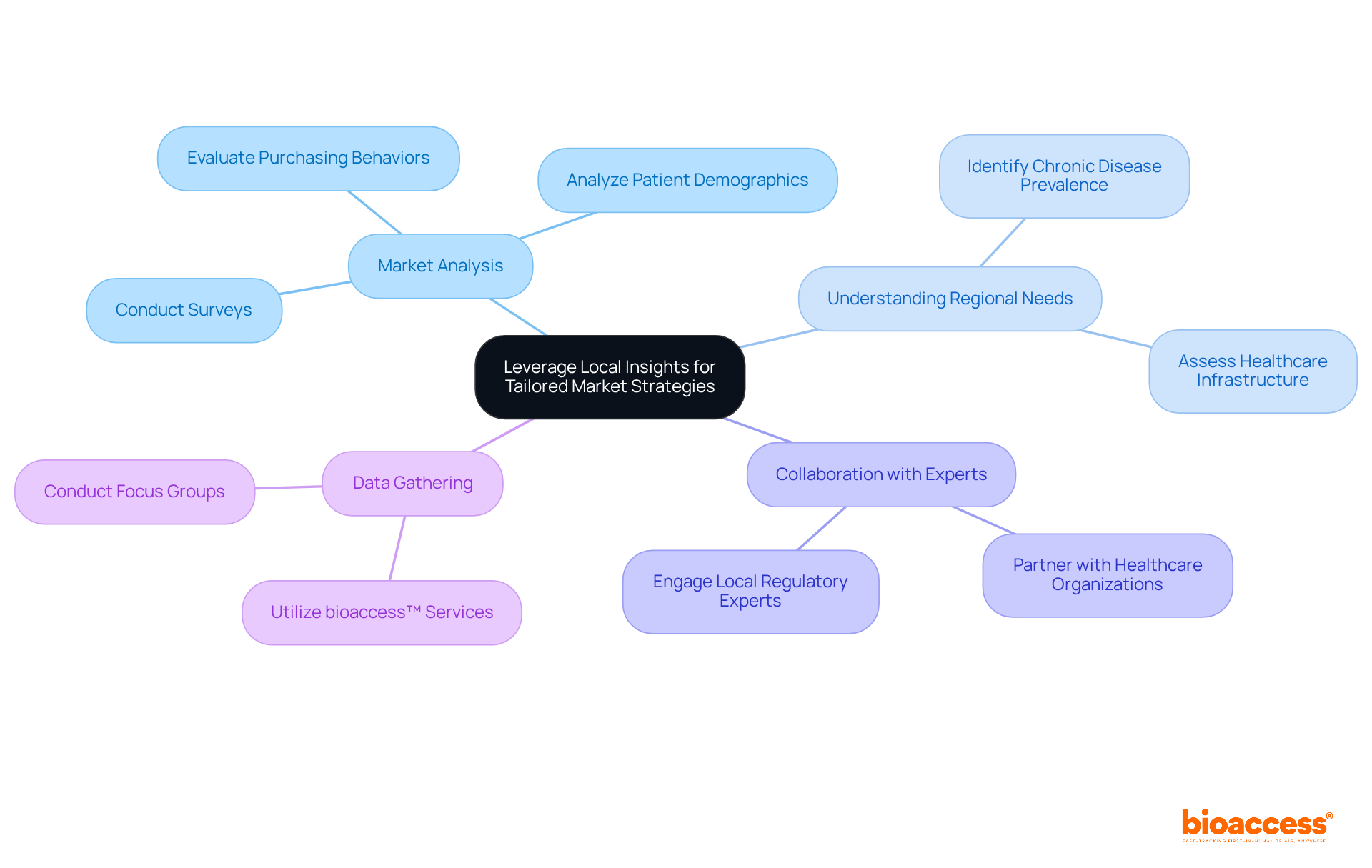
To effectively enter the Latin American healthcare equipment market, companies should conduct a Latin America medical device market analysis to leverage regional insights that significantly influence their marketing and product strategies. Understanding regional healthcare needs, patient demographics, and purchasing behaviors is crucial. For instance, countries with a high prevalence of chronic diseases, such as diabetes and hypertension, exhibit increased demand for specific medical devices tailored to these conditions. Conducting focus groups and surveys can yield valuable feedback on product features and pricing strategies, allowing companies to align their offerings with regional expectations.
Collaborating with regional healthcare experts and organizations provides deeper insights into effective product positioning and entry strategies. Involving regional research companies can further enhance data gathering, ensuring that strategic planning is guided by precise and pertinent information. bioaccess™ offers extensive services, including trial setup, project management, and regulatory navigation, which are essential for successful entry into the industry. As the medical device sector in Latin America continues to expand, with a valuation of approximately $11 billion, a comprehensive Latin America medical device market analysis will be vital for companies aiming to navigate the complexities of this diverse area and meet the evolving healthcare demands of its population.
Involving community stakeholders is essential for a successful entry into Latin America. Healthcare providers, regulatory agencies, and patient advocacy organizations significantly influence industry dynamics and consumer needs. By establishing strong relationships with these entities, companies can facilitate smoother product introductions and enhance their credibility within the region.
Organizing workshops or informational sessions can educate stakeholders about products while gathering valuable feedback. Additionally, engaging in community healthcare conferences offers networking opportunities and insights into emerging trends, further enhancing industry understanding.
By fostering partnerships with local stakeholders, companies can greatly improve their grasp of the market landscape. This collaboration ultimately increases the likelihood of successful product adoption and integration into healthcare systems.

The Latin American medical device market offers a distinctive landscape brimming with opportunities and challenges that demand careful navigation. Understanding the regional dynamics - such as healthcare needs and regulatory frameworks - is essential for companies looking to establish a foothold in this rapidly expanding sector. By conducting a thorough market analysis, organizations can position themselves effectively to meet the diverse demands of the region and ultimately enhance patient outcomes.
Key insights underscore the necessity of tailored strategies, regulatory compliance, and local stakeholder engagement. Companies must acknowledge the differences in healthcare infrastructure across countries like Brazil and Mexico, adapting their approaches accordingly. Moreover, leveraging local insights and cultivating relationships with healthcare providers and regulatory agencies can significantly boost the likelihood of successful product adoption and integration into healthcare systems.
As the medical device market in Latin America continues to flourish, companies are urged to prioritize comprehensive market analysis and stakeholder collaboration. Embracing these best practices not only facilitates smoother market entry but also contributes to the overall enhancement of healthcare delivery in the region. Engaging with local experts and grasping consumer behavior will be crucial as organizations strive to meet the evolving healthcare demands of Latin America.
What is the projected value of the Latin American medical device market by 2033?
The Latin American medical device market is projected to reach approximately USD 75.30 billion by 2033.
What factors are driving the growth of the medical device sector in Latin America?
The growth is driven by an aging population, rising healthcare expenditures, and an increasing demand for advanced medical technologies.
How does healthcare spending impact competition in the Latin American medical device market?
As healthcare spending escalates, both public and private investments increase, intensifying competition among local manufacturers and global corporations for market share.
Which countries are highlighted as key players in the Latin American medical device market?
Brazil and Mexico are identified as the largest economies, while Chile is recognized for its effective governance.
Why is it important for companies to conduct a market analysis before entering the Latin American medical device market?
Conducting a market analysis helps identify specific opportunities and challenges unique to each target market, aids in navigating compliance complexities, and enhances the chances of successful product adoption and improved patient outcomes.
What challenges do companies face in the Latin American medical device market?
Companies face challenges related to regional disparities in healthcare infrastructure and purchasing power, which necessitate tailored strategies for different countries.