

In the complex realm of clinical research, the translation and localization of trial documents in Croatia present both a challenge and an opportunity. Regulatory compliance relies heavily on precise language and cultural relevance, making it essential for researchers to grasp best practices in this field. This understanding not only streamlines processes but also enhances participant engagement.
But how can organizations ensure their documentation meets regulatory standards while resonating with local audiences? By exploring the intersection of regulatory requirements, cultural nuances, and quality assurance processes, we uncover critical insights that can significantly influence the success of clinical trials in Croatia.
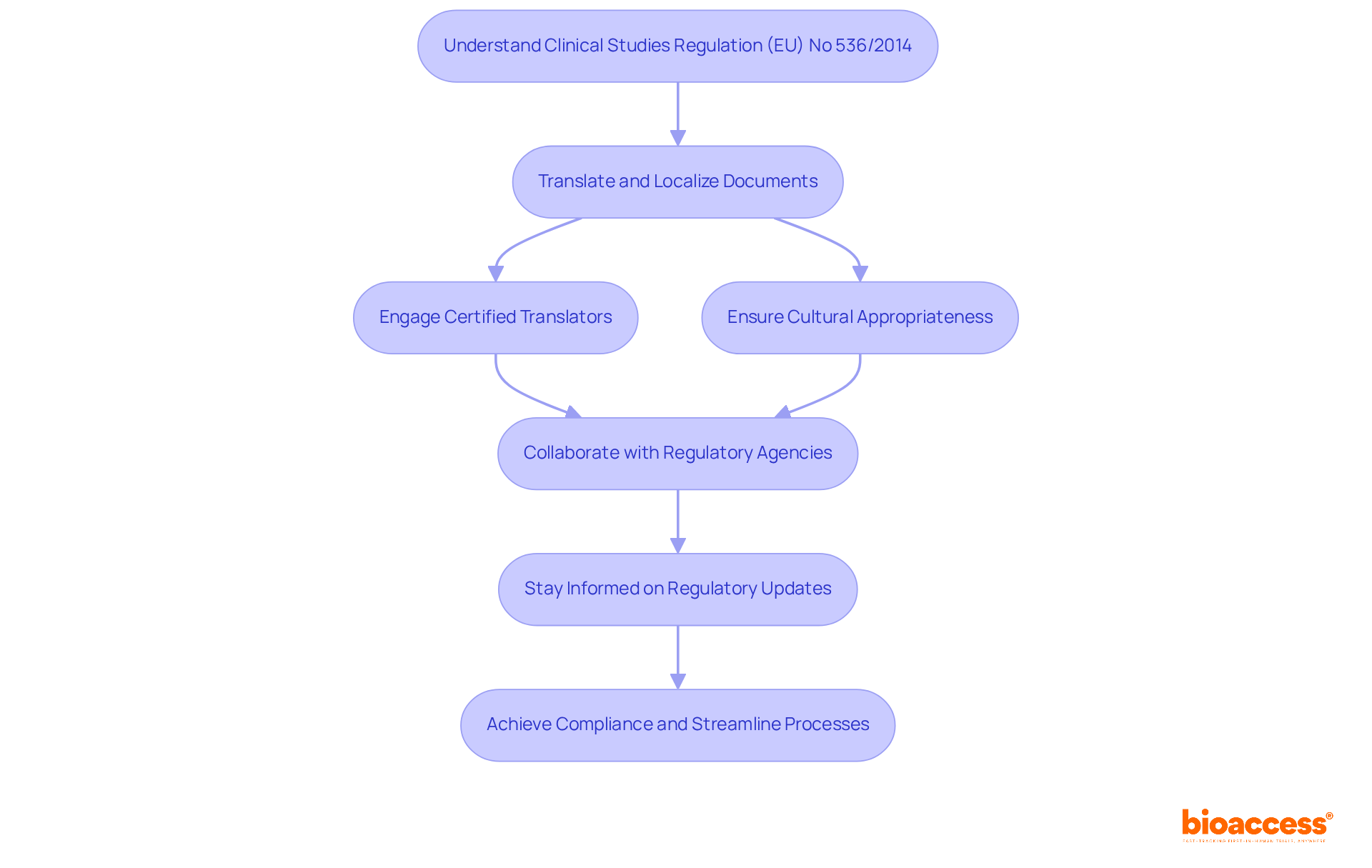
In Croatia, adhering to the Clinical Studies Regulation (EU) No 536/2014 is crucial for the validity of clinical research documents. This regulation mandates that all documentation, including informed consent forms, study protocols, and regulatory submissions, must be subject to the translation and localization of trial documents in Croatia by certified translators. By involving professional language service providers (LSPs) with expertise in medical terminology, you ensure that the translation and localization of trial documents in Croatia meet regulatory standards and are culturally appropriate.
Statistics reveal that inadequate documentation accounts for 28% of delayed submissions in clinical studies. This underscores the importance of precise language conversions to avoid holdups or denials of study applications. Are you aware of how your documentation practices might be affecting your timelines? Staying informed about regulatory updates is essential, as changes can significantly impact translation practices. Collaborating with regional regulatory agencies can provide valuable insights into specific criteria and optimal submission methods, ultimately facilitating smoother processes and enhancing compliance.
Additionally, bioaccess offers accelerated site activation and compliance solutions, delivering FDA/EMA/MDR-ready datasets in under 8 weeks. This capability not only streamlines your operations but also positions you for success in the competitive Medtech landscape. Embrace the importance of collaboration and take the next steps to ensure your clinical research is both compliant and efficient.
When considering the translation and localization of trial documents in Croatia, it’s crucial to recognize the cultural nuances that shape how information is perceived. Understanding regional idioms, expressions, and the tone that resonates with Croatian participants is essential.
For example, certain medical terms may carry different connotations in Croatian than in English, potentially leading to misunderstandings if not properly addressed.
Collaborating with local translators who grasp the cultural context ensures that the translation and localization of trial documents in Croatia are both linguistically accurate and culturally appropriate. This approach fosters trust and transparency, ultimately enhancing participant understanding and engagement in the study.

Involving regional specialists, such as certified interpreters and healthcare professionals, is essential for ensuring the accuracy of translated study documents. These experts have a deep understanding of both the language and the specific medical terminology relevant to clinical trials. Their insights into regional practices and preferences can greatly impact how information is communicated. For example, translators familiar with the translation and localization of trial documents in Croatia enhance the clarity and relevance of the documents.
Forming partnerships with local translation agencies or freelance translators specializing in medical translations can significantly improve the quality of translated materials. This collaboration ensures adherence to both linguistic and regulatory standards. Such a cooperative approach not only promotes accuracy but also builds trust with local stakeholders, ultimately facilitating smoother processes and enhancing patient engagement.

To ensure the highest quality in the translation and localization of trial documents in Croatia, implementing robust quality assurance processes is essential. This involves various assessment phases, including initial rendition, editing, and proofreading by distinct experts. Back-translation techniques, where another translator reverts the translated text to the source language, can help identify discrepancies and ensure accuracy. Statistics reveal that flawed clinical interpretations can compromise the overall analysis and validity of trial results, highlighting the necessity of these processes.
Moreover, establishing a glossary of key terms and phrases promotes consistency across all documents. Consistent training and updates for translators on regulatory changes and medical terminology further enhance the quality of rendered content. As emphasized by global health authorities, the accuracy in the translation and localization of trial documents in Croatia is not merely a best practice; it’s a requirement for maintaining compliance. By prioritizing quality assurance, organizations can minimize the risk of errors, safeguard patient rights, and ensure that the translation and localization of trial documents in Croatia are compliant and effective, ultimately supporting successful clinical outcomes.
Common pitfalls to avoid include:
These can lead to misinterpretations and potential harm to patients.

Ensuring the successful translation and localization of trial documents in Croatia is crucial for clinical research. This multifaceted process demands careful attention to regulatory compliance, cultural nuances, and quality assurance. Adhering to the Clinical Studies Regulation and collaborating with certified translators and local experts are vital steps in achieving accurate and effective documentation. By prioritizing these practices, organizations can navigate the complexities of clinical research while fostering trust and clarity among participants.
Key insights highlight the significance of understanding regulatory requirements, incorporating cultural context, and implementing robust quality assurance measures. These elements work together to minimize delays and enhance the overall integrity of clinical trials. Moreover, collaboration with local professionals not only aids in linguistic accuracy but also ensures that documents resonate with the target audience. This ultimately leads to improved participant engagement and compliance.
As the landscape of clinical research evolves, staying informed and proactive about best practices in translation and localization becomes increasingly important. Embracing these strategies safeguards patient rights and positions organizations for success in a competitive environment. Therefore, taking actionable steps toward effective trial document translation in Croatia is not just a regulatory necessity; it is a commitment to excellence that can significantly impact the outcomes of clinical studies.
What is the main regulation governing clinical research documents in Croatia?
The main regulation is the Clinical Studies Regulation (EU) No 536/2014, which outlines the requirements for clinical research documentation in Croatia.
What types of documents must be translated and localized in Croatia?
All documentation, including informed consent forms, study protocols, and regulatory submissions, must be translated and localized by certified translators.
Why is it important to use professional language service providers (LSPs) for translation in clinical research?
Professional LSPs have expertise in medical terminology, ensuring that the translation and localization of trial documents meet regulatory standards and are culturally appropriate.
What percentage of delayed submissions in clinical studies is attributed to inadequate documentation?
Statistics reveal that inadequate documentation accounts for 28% of delayed submissions in clinical studies.
How can staying informed about regulatory updates impact translation practices?
Staying informed about regulatory updates is essential as changes can significantly affect translation practices, potentially impacting the validity of clinical research documents.
What benefits does collaboration with regional regulatory agencies provide?
Collaboration with regional regulatory agencies can provide valuable insights into specific criteria and optimal submission methods, facilitating smoother processes and enhancing compliance.
What solutions does Bioaccess offer to streamline clinical research processes?
Bioaccess offers accelerated site activation and compliance solutions, delivering FDA/EMA/MDR-ready datasets in under 8 weeks, which helps streamline operations and enhances competitiveness in the Medtech landscape.