

Understanding the complex regulatory frameworks that govern clinical research is crucial for local investigators committed to maintaining ethical standards and ensuring participant safety. Tailored regulatory compliance training empowers these professionals with the essential knowledge and skills needed to effectively navigate the intricate landscape of regulations.
As compliance requirements evolve rapidly, how can training programs be adapted to keep pace with the dynamic nature of clinical research?
Local officials must possess a comprehensive understanding of the frameworks governing clinical research, particularly the guidelines established by the FDA, EMA, and local health authorities. This knowledge is not just beneficial; it’s essential for ensuring ethical and effective research practices.
Good Clinical Practice (GCP) is a cornerstone of this understanding. Familiarity with GCP guidelines is crucial, as they outline the ethical and scientific quality standards for the design, conduct, recording, and reporting of clinical trials. The ICH-GCP guidelines, often regarded as the 'bible' of clinical trials, arose from historical events that underscored the necessity for regulation in research involving human subjects. These guidelines are vital for protecting the rights of trial participants and ensuring the integrity of the data collected.
Informed Consent is another critical area. Investigators must grasp the requirements for obtaining informed consent, ensuring that participants are fully aware of the study's purpose, risks, and benefits. This process is fundamental for upholding ethical standards and fostering participant trust.
Ethics Committees and Institutional Review Boards (IRBs) play a pivotal role in this landscape. Knowledge of their functions is essential, as these bodies review and approve research protocols to protect participant rights and welfare. Their oversight is a key element of ethical adherence in clinical trials.
Moreover, staying informed about Local Regulations is imperative. Understanding local laws and regulations that may impact clinical research, including data protection laws and specific requirements for medical devices or pharmaceuticals, is crucial, as these can vary significantly by region.
By mastering these frameworks, researchers can benefit from regulatory compliance training for local investigators, thereby enhancing the integrity and credibility of their research efforts. The increasing emphasis on GCP adherence is evident in the rising number of registered clinical trials, which surpassed 29,000 by the end of 2017, highlighting the industry's commitment to ethical research practices.

To enhance regulatory adherence, it’s essential to implement regulatory compliance training for local investigators that is tailored to their unique educational needs. This approach not only focuses on regulatory compliance training for local investigators but also empowers them with the necessary skills to navigate complex regulations effectively.
Needs Assessment: Begin with a thorough assessment to pinpoint knowledge gaps and training needs among investigators. Utilize surveys, interviews, or focus groups to gather insights, ensuring that the instruction remains relevant and targeted.
Curriculum Development: Next, design a curriculum that meets these identified needs. Incorporate relevant guidelines, ethical considerations, and practical case studies that mirror real-world scenarios, making the learning experience applicable and impactful.
Interactive Learning: Engage participants through dynamic educational methods such as workshops, simulations, and role-playing exercises. These interactive approaches not only involve participants but also reinforce their learning, making it more memorable.
Resource Availability: Finally, ensure that essential resources are readily accessible. This includes regulatory documents, instructional manuals, and online courses that support ongoing learning and development.
By implementing these tailored development programs, organizations can equip researchers with the critical skills and knowledge necessary for conducting successful research, including regulatory compliance training for local investigators.

To ensure continuous adherence and enhance researcher capabilities, organizations like bioaccess must establish ongoing training and support systems. Here are key strategies to consider:
By prioritizing ongoing development, organizations like bioaccess can enhance researcher proficiency and provide regulatory compliance training for local investigators to ensure compliance with evolving legal standards.

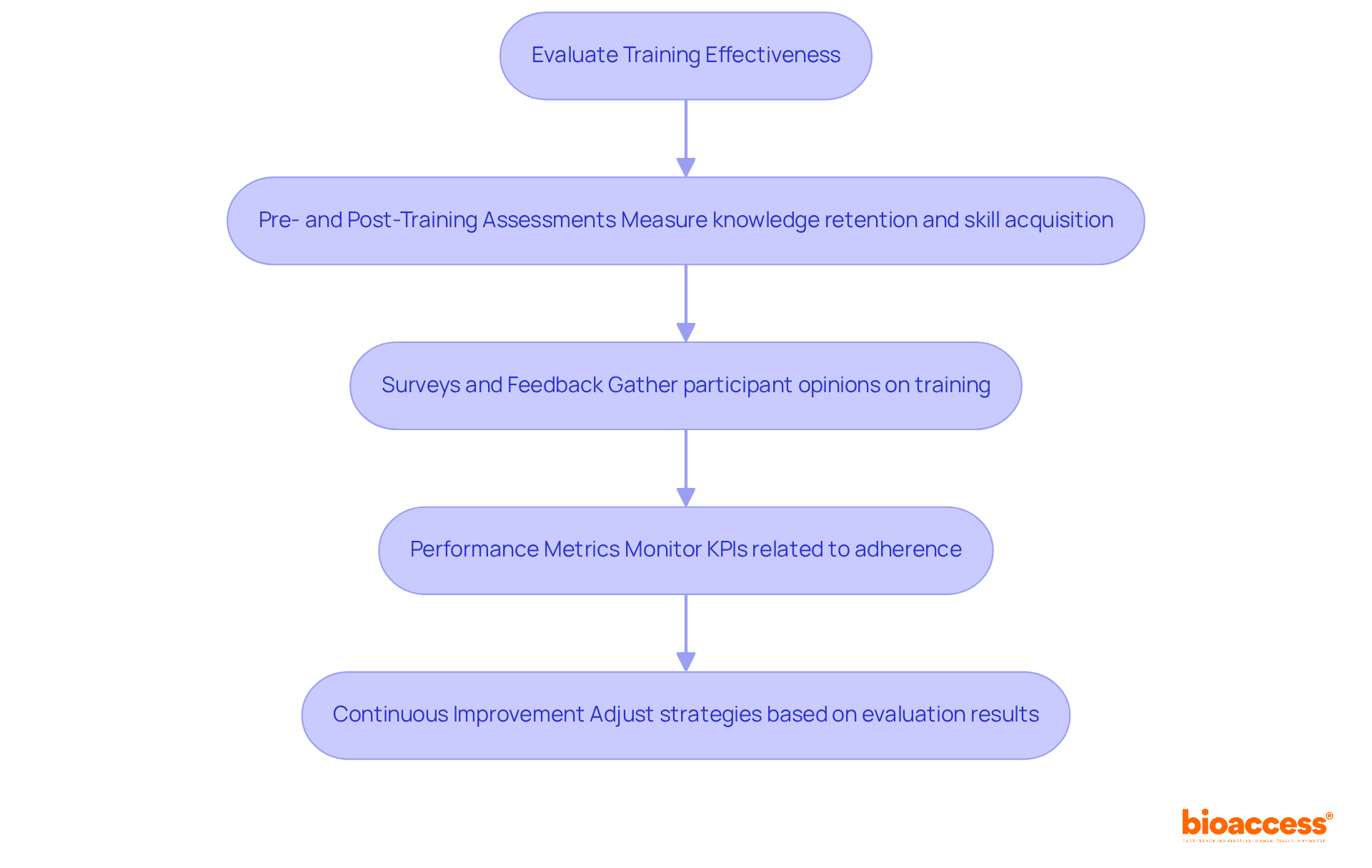
To ensure the success of regulatory compliance training for local investigators, organizations must rigorously evaluate its effectiveness and adapt strategies accordingly. This evaluation is crucial in the ever-evolving landscape of clinical research, highlighting the importance of regulatory compliance training for local investigators, where compliance is paramount.
Pre- and Post-Training Assessments: Implement assessments before and after training sessions to effectively measure knowledge retention and skill acquisition among investigators. This dual assessment method not only measures immediate learning outcomes but also guides future development needs. As Ogles et al. noted, "The individual-based statistics help interpreting the meaning of the effect size estimation," emphasizing the importance of understanding individual learning outcomes.
Surveys and Feedback: Actively gather participant opinions through surveys regarding the content, delivery methods, and overall satisfaction. This feedback is invaluable for refining educational materials and enhancing engagement. Employee satisfaction serves as a key qualitative data point for assessing learning and development success.
Performance Metrics: Monitor key performance indicators (KPIs) related to adherence, such as audit results and incident reports. Monitoring these metrics enables organizations to evaluate the concrete effect of regulatory compliance training for local investigators on their performance and adherence to regulations. For instance, improved retention rates can indicate learning effectiveness but are not solely affected by learning and development initiatives.
Continuous Improvement: Leverage evaluation results to pinpoint areas for enhancement in development programs. By making necessary adjustments based on feedback and performance data, organizations can significantly enhance the effectiveness of their adherence education initiatives. The results from different studies indicate that systematic assessment results in improved alignment with changing compliance requirements.
By systematically evaluating training effectiveness, organizations can ensure that their regulatory compliance training for local investigators is both impactful and aligned with evolving regulatory requirements.
Enhancing regulatory compliance training for local investigators is not just a procedural necessity; it’s a cornerstone that upholds the integrity and credibility of clinical research. By equipping investigators with a thorough understanding of regulatory frameworks and tailored training programs, organizations can create an environment where ethical standards are prioritized, and participant rights are safeguarded.
This article has outlined several key strategies to achieve this objective. Grasping regulatory frameworks, such as Good Clinical Practice and local regulations, is vital for investigators. Customized training programs that target specific knowledge gaps, paired with ongoing support systems, ensure that researchers stay informed and adept at navigating complex compliance landscapes. Moreover, continuous evaluation of training effectiveness is essential to adapt strategies and enhance learning outcomes, reinforcing the commitment to regulatory adherence.
The importance of robust regulatory compliance training cannot be overstated. As clinical research evolves, organizations must prioritize the development of comprehensive training initiatives that empower local investigators. This commitment not only ensures compliance with existing regulations but also advances ethical research practices, fostering trust and safety in clinical trials. Such a proactive approach will pave the way for a more reliable and ethical research environment, benefiting both participants and the broader scientific community.
Why is it important for local officials to understand regulatory frameworks in clinical research?
It is essential for ensuring ethical and effective research practices, as it helps in adhering to guidelines established by regulatory bodies like the FDA, EMA, and local health authorities.
What is Good Clinical Practice (GCP)?
Good Clinical Practice (GCP) is a set of ethical and scientific quality standards for the design, conduct, recording, and reporting of clinical trials, crucial for protecting trial participants' rights and ensuring data integrity.
What are the ICH-GCP guidelines?
The ICH-GCP guidelines are internationally recognized standards for clinical trials, often referred to as the 'bible' of clinical trials, developed in response to historical events that highlighted the need for regulation in research involving human subjects.
What is informed consent, and why is it important?
Informed consent is the process of ensuring that participants are fully aware of a study's purpose, risks, and benefits. It is fundamental for upholding ethical standards and fostering trust between participants and researchers.
What role do Ethics Committees and Institutional Review Boards (IRBs) play in clinical research?
Ethics Committees and IRBs review and approve research protocols to protect participant rights and welfare, ensuring ethical adherence in clinical trials.
Why is it necessary to stay informed about local regulations in clinical research?
Understanding local laws and regulations, including data protection laws and specific requirements for medical devices or pharmaceuticals, is crucial as these can vary significantly by region and impact clinical research.
How can mastering regulatory frameworks benefit researchers?
By mastering these frameworks, researchers can enhance the integrity and credibility of their research efforts and benefit from regulatory compliance training for local investigators.
What trend has been observed in the number of registered clinical trials?
There has been an increasing emphasis on GCP adherence, evident in the rising number of registered clinical trials, which surpassed 29,000 by the end of 2017, highlighting the industry's commitment to ethical research practices.