

Understanding clinical trial ethics is essential in medical research, especially in North Macedonia, where recent developments underscore the need to protect participant rights and uphold research integrity. This article explores the critical components of the clinical trial ethics review structure, providing insights into the regulatory framework, key stakeholders, and a step-by-step guide to navigating the review process. As researchers strive to maintain ethical standards, they often face significant challenges that prompt important questions:
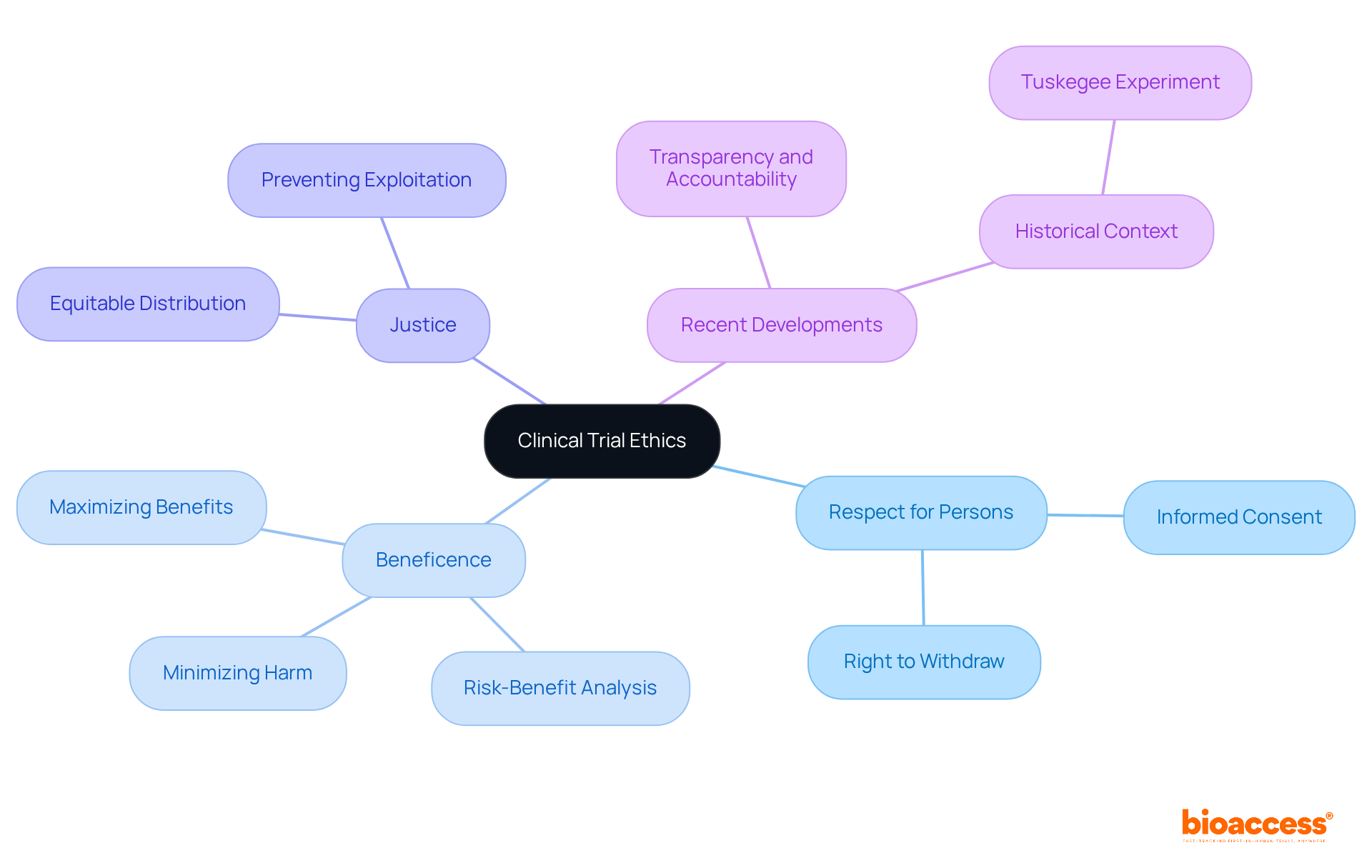
Clinical research ethics encompasses the moral principles and guidelines that govern studies involving human participants. It ensures that research is conducted with utmost respect for participants' rights, safety, and well-being. The key ethical principles include:
Recent developments in trial ethics guidelines in 2026 have further reinforced these principles. They emphasize the need for transparency and accountability in research practices. Historical context, such as the moral transgressions observed in the Tuskegee experiment, highlights the significance of these principles in safeguarding participants and preserving public confidence in research. Following these moral standards not only meets legal requirements but also boosts the credibility and reliability of medical research, which is essential within the clinical trial ethics review structure in North Macedonia. Ultimately, this results in more dependable outcomes and better public health.
The regulatory framework for clinical trials in North Macedonia is governed by several key laws and guidelines that are crucial for ensuring ethical and scientifically valid research.
Law on Medicinal Products and Medical Devices: This law outlines the requirements for conducting clinical trials, emphasizing the necessity of ethical review and approval from an ethics committee before initiating any study. Recent updates have clarified the processes involved, ensuring that participant rights are prioritized while maintaining scientific integrity.
Good Clinical Practice (GCP): North Macedonia adheres to GCP guidelines, which guarantee that studies are conducted ethically and with scientific rigor. Following these guidelines is essential for all research studies, and data indicate that compliance has led to a significant reduction in approval times, with many studies receiving clearance within 4-6 weeks.
National Ethics Committee: This committee is responsible for reviewing and endorsing research protocols as part of the clinical trial ethics review structure in North Macedonia to ensure adherence to ethical standards. Researchers must submit their protocols for review prior to commencing any study. However, navigating the approval process can be challenging, often involving delays in protocol review and the necessity for comprehensive documentation.
In addition to understanding these regulations, bioaccess offers extensive research study management services that include feasibility assessments, site selection, compliance evaluations, setup, import permits, project oversight, and reporting. This comprehensive approach enables researchers to effectively navigate the complexities of study approval while ensuring compliance with both national and international standards. As Charles Foster aptly noted, "The dilemmas are agonizing. One man’s treatment is another man’s denial of treatment." This statement underscores the importance of moral considerations in medical research, particularly in a rapidly evolving regulatory landscape.

The clinical trial ethics review structure in North Macedonia represents a vital collaborative effort, engaging several key stakeholders essential for ensuring the ethical conduct of clinical trials.
Researchers play a crucial role, tasked with designing and conducting trials while rigorously adhering to ethical guidelines and regulatory requirements. Their commitment is pivotal in maintaining the integrity of the research process, ensuring that every aspect aligns with established moral standards.
Ethics Committees (ECs), as autonomous entities, assess study protocols to evaluate their moral implications. They safeguard participant rights and welfare, operating under principles such as autonomy, justice, and beneficence. As of 2026, ECs continue to monitor ongoing research, ensuring compliance with Good Clinical Practice (GCP) guidelines, which reinforces the ethical framework within which clinical trials operate.
Regulatory Authorities oversee adherence to laws and regulations governing clinical studies. These government bodies provide crucial direction and enforcement, ensuring that moral standards are upheld throughout the research lifecycle, thus fostering a culture of accountability.
Sponsors, whether organizations or individuals financing the study, bear the responsibility of ensuring that ethical standards are met. They must conduct experiments responsibly, aligning their objectives with the welfare of participants, which is fundamental to ethical research practices.
Participants are at the heart of the review process. Their rights and well-being must be prioritized, with informed consent being a fundamental requirement that reflects the ethical commitment to respect and protect human subjects.
Engaging meaningfully with these stakeholders is essential for an effective review process, promoting a culture of responsibility and openness in clinical research. This collaboration not only enhances the ethical landscape but also supports the development of the clinical trial ethics review structure in North Macedonia.

Navigating the clinical trial ethics review structure in North Macedonia is crucial for ensuring the integrity of clinical research. Here are the essential steps to follow:
By following these steps, you can effectively navigate the clinical trial ethics review structure in North Macedonia, facilitating the ethical conduct of clinical trials.

Mastering the ethical framework surrounding clinical trials in North Macedonia is not just important; it’s essential for ensuring that research involving human participants is conducted with integrity and respect. By adhering to established ethical principles - such as respect for persons, beneficence, and justice - researchers not only comply with legal requirements but also enhance the credibility of their findings, ultimately benefiting public health.
This article outlines the regulatory framework governing clinical trials in North Macedonia, detailing the critical importance of ethical reviews and the roles of key stakeholders:
Each of these entities plays a vital role in upholding ethical standards, fostering a culture of accountability and transparency within clinical research. Furthermore, a clear, step-by-step guide for navigating the ethics review process has been provided, emphasizing the necessity of thorough preparation and compliance with established guidelines.
The significance of mastering clinical trial ethics cannot be overstated. As the landscape of medical research continues to evolve, maintaining high ethical standards is crucial for protecting participants and ensuring the validity of research outcomes. Stakeholders are encouraged to engage actively in this ethical framework, promoting a collaborative environment that prioritizes the welfare of participants and the integrity of research. By doing so, the clinical trial ethics review structure in North Macedonia can continue to thrive, contributing to advancements in medical science and public health.
What is clinical trial ethics?
Clinical trial ethics refers to the moral principles and guidelines that govern studies involving human participants, ensuring that research is conducted with respect for participants' rights, safety, and well-being.
What are the key ethical principles in clinical research?
The key ethical principles in clinical research include: - Respect for Persons: Emphasizes informed consent, ensuring participants are aware of the study's nature, risks, and their right to withdraw. - Beneficence: Obliges researchers to maximize potential benefits while minimizing harm, requiring a thorough risk-benefit evaluation. - Justice: Mandates equitable distribution of research benefits and burdens across societal groups to prevent exploitation of vulnerable populations.
How have recent developments in trial ethics guidelines impacted clinical research?
Recent developments in trial ethics guidelines in 2026 have reinforced the ethical principles by emphasizing the need for transparency and accountability in research practices.
Why is historical context important in understanding clinical trial ethics?
Historical context, such as the moral transgressions observed in the Tuskegee experiment, highlights the importance of ethical principles in safeguarding participants and maintaining public confidence in research.
How do ethical standards in clinical trials affect public health?
Adhering to ethical standards not only meets legal requirements but also enhances the credibility and reliability of medical research, leading to more dependable outcomes and improved public health.