

Decentralized clinical trials are revolutionizing the landscape of medical research by shifting activities from traditional clinical settings to more accessible environments. This transformative approach enhances participant engagement and promises to streamline the research process, particularly in Romania, where the regulatory framework is evolving to support these innovative studies. However, as the country embraces this shift, stakeholders must navigate the complexities of decentralized trials while ensuring data integrity and participant involvement.
What strategies can stakeholders employ to maximize the benefits of this new model and overcome the inherent challenges? By addressing these questions, we can better understand the potential of decentralized trials and their role in advancing clinical research.
Decentralized clinical studies represent a groundbreaking approach to clinical research, where activities take place beyond traditional clinical settings. This innovative model not only enhances accessibility but also offers convenience, allowing participants to engage in studies from the comfort of their homes or local healthcare facilities. In Romania, the decentralized trials regulatory framework highlights the importance of decentralized clinical studies, driven by the country's diverse demographics and the pressing need for effective study procedures.
By leveraging advanced technology and remote monitoring, decentralized clinical trials can significantly reduce participant burdens, leading to higher enrollment rates and improved data quality. This approach aligns seamlessly with Romania's strategic objectives to attract more research studies, particularly within the decentralized trials regulatory framework, while aiming to enhance healthcare outcomes within the system. As Kris Kingsbury aptly noted, "Decentralized clinical studies provide enhanced adaptability as individuals engage in research, lessening their obligation to visit the location and catering to personal needs and preferences of the individual."
Moreover, bioaccess's unique sprint approach facilitates regulatory approval in just 6-8 weeks, a remarkable improvement compared to the typical 6-12 months seen in the US and EU. This expedited process, combined with the ability to enroll treatment-naive cardiology or neurology groups 50% faster than their Western counterparts, positions bioaccess as a leader in tackling recruitment challenges in early-phase clinical studies. Research indicates that decentralized clinical studies can cut costs by as much as 30% compared to conventional studies, making them an attractive option for both sponsors and participants.
However, challenges such as patient involvement and data accuracy must be addressed to ensure the successful execution of decentralized clinical trials. With 25% of conventional study participants living over 100 miles from the study site, decentralized clinical studies effectively confront significant geographical barriers. The projected growth of Romania's medical research market from €72 million in 2019 to over €210 million by 2026 underscores the critical role of the decentralized trials regulatory framework in expanding research opportunities.
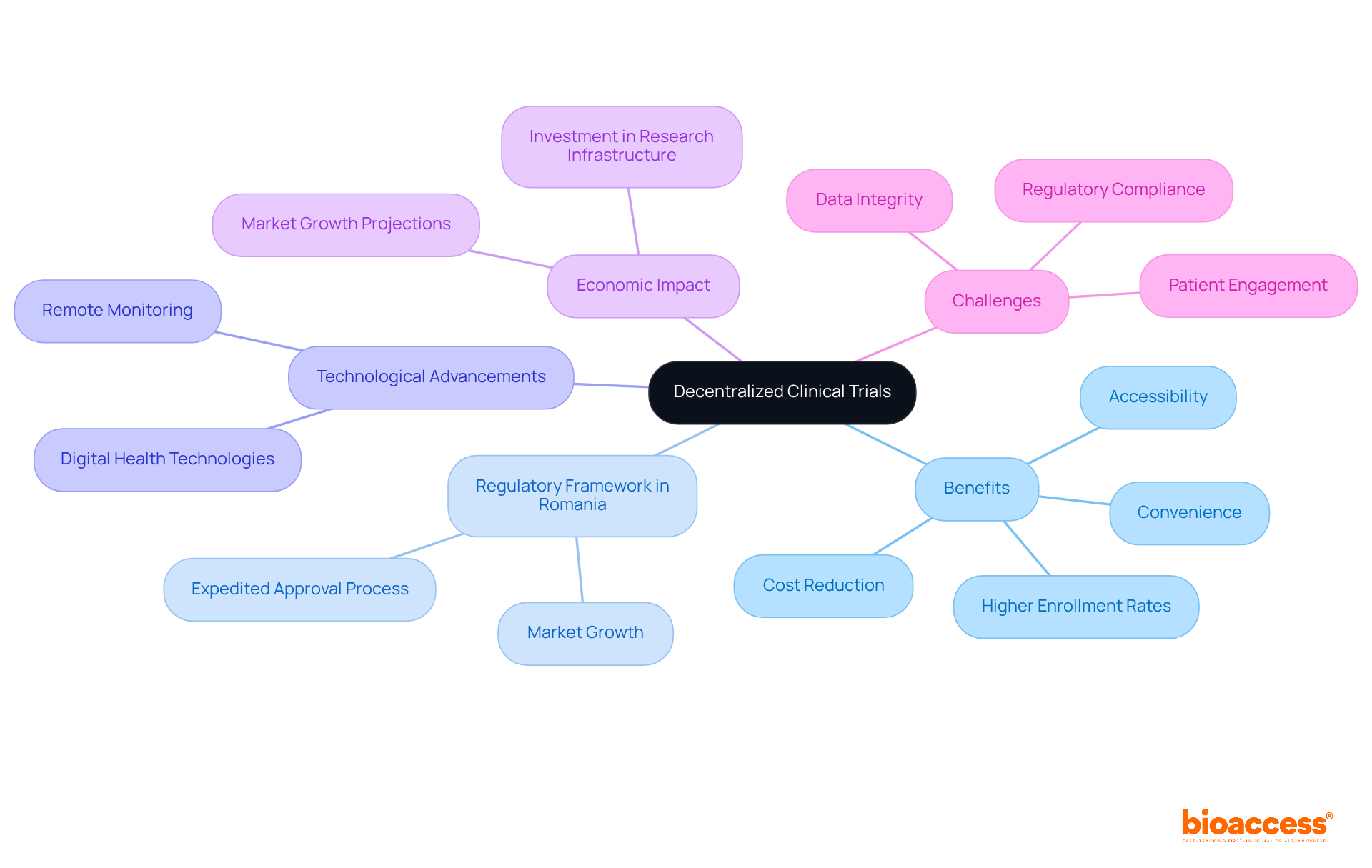
Recent regulatory updates in Romania, particularly the full implementation of the EU Clinical Trials Regulation (EU No. 536/2014), have significantly streamlined the approval process for clinical studies, including those with decentralized elements. As of January 2025, Romania has introduced a 30-day silent approval mechanism, drastically reducing the time required to initiate studies. This is a vital enhancement, especially considering that approval times could previously extend up to 120 days for complex situations like oncology studies.
Furthermore, the National Agency for Medicines and Medical Devices (ANMDMR) has issued comprehensive guidelines that facilitate the integration of decentralized methodologies in accordance with the decentralized trials regulatory framework in Romania, placing a strong emphasis on patient safety and data integrity. There is also increased scrutiny of biospecimen data integrity and traceability, resulting in more audits of biospecimen logistics. These advancements not only demonstrate Romania's commitment to enhancing its research environment but also position the country as an increasingly attractive location for a decentralized trials regulatory framework in Romania, aligning with the global trend towards more adaptable and patient-focused research methods.
Companies like bioaccess® are at the forefront of this evolution, offering services that leverage these regulatory changes. Their offerings include:
Expert insights, such as those from Dr. Claudia Hesselmann, highlight Romania's competitive position within the EU and the global clinical research landscape, underscoring the significance of these regulatory changes.

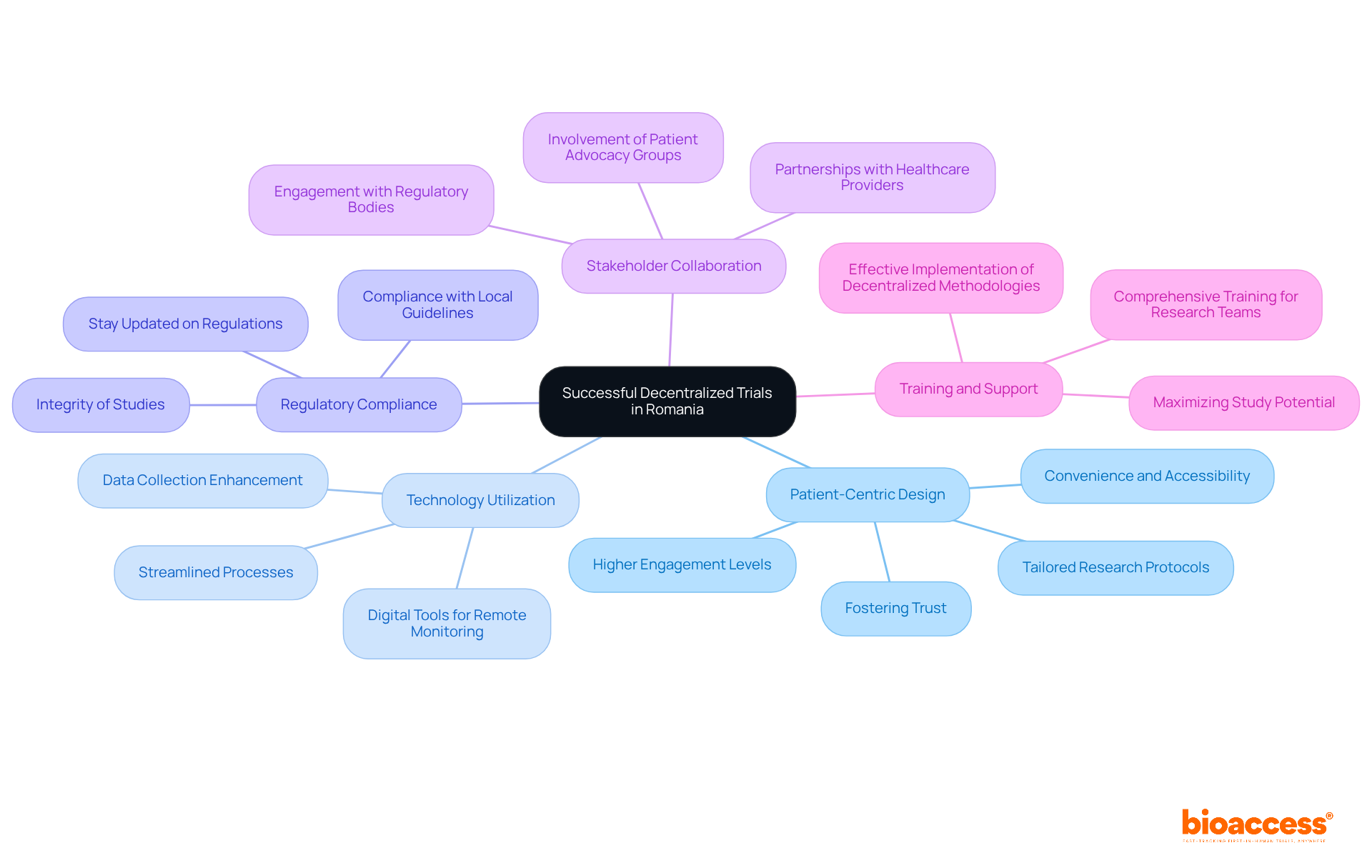
To successfully implement a decentralized trials regulatory framework in Romania, stakeholders must adopt effective strategies that enhance clinical research outcomes.
Furthermore, utilizing bioaccess's extensive clinical study management services - such as feasibility assessments, site selection, compliance evaluations, study setup, import permits, project management, and reporting - can greatly enhance the success of these studies. By adopting these strategies, sponsors can effectively navigate the complexities of decentralized trials while maximizing their potential benefits.
Decentralized clinical trials signify a pivotal shift in the realm of clinical research, particularly within Romania's evolving regulatory landscape. This innovative model not only enhances accessibility for participants but also streamlines the research process, aligning with global trends that prioritize patient-centric approaches. By focusing on reducing participant burdens and leveraging technology, decentralized trials emerge as a crucial element in improving healthcare outcomes and strengthening the country's research capabilities.
Key insights throughout this discussion underscore the advantages of decentralized trials, such as:
Recent regulatory advancements, including the introduction of a 30-day silent approval mechanism and comprehensive guidelines from the National Agency for Medicines and Medical Devices, further ease the integration of these methodologies. Stakeholders can successfully navigate the complexities of decentralized trials by:
As Romania continues to refine its clinical research landscape, the importance of the decentralized trials regulatory framework cannot be overstated. Stakeholders are urged to leverage these insights and strategies to enhance the efficiency of clinical studies while contributing to the broader objective of improving healthcare outcomes. By embracing this innovative approach, Romania can solidify its position as a leader in decentralized clinical research, ultimately benefiting both participants and the healthcare system as a whole.
What are decentralized clinical trials?
Decentralized clinical trials are a modern approach to clinical research where activities occur outside traditional clinical settings, allowing participants to engage in studies from their homes or local healthcare facilities.
Why are decentralized trials important in Romania?
They enhance accessibility and convenience for participants, align with Romania's strategic objectives to attract more research studies, and aim to improve healthcare outcomes by leveraging the country's diverse demographics.
How do decentralized trials improve participant enrollment and data quality?
By reducing participant burdens through advanced technology and remote monitoring, decentralized trials lead to higher enrollment rates and improved data quality.
What is the regulatory framework for decentralized trials in Romania?
Romania has established a decentralized trials regulatory framework that emphasizes the significance of these studies, aiming to enhance research opportunities and healthcare outcomes.
How does bioaccess facilitate the approval process for decentralized trials?
Bioaccess employs a unique sprint approach that allows for regulatory approval in just 6-8 weeks, significantly faster than the typical 6-12 months seen in the US and EU.
What are the cost benefits of decentralized clinical studies?
Decentralized clinical studies can reduce costs by as much as 30% compared to conventional studies, making them an attractive option for sponsors and participants.
What challenges do decentralized trials face?
Challenges include ensuring patient involvement and maintaining data accuracy to guarantee the successful execution of the trials.
How do decentralized trials address geographical barriers for participants?
Decentralized trials can effectively reach participants who live over 100 miles from study sites, thus overcoming significant geographical barriers that conventional studies face.
What is the projected growth of Romania's medical research market?
Romania's medical research market is projected to grow from €72 million in 2019 to over €210 million by 2026, highlighting the importance of the decentralized trials regulatory framework.