

Coordinating central and local labs in clinical trials is not just complex; it’s a crucial task that can greatly impact research outcomes. By clearly defining roles and responsibilities, establishing effective communication channels, ensuring compliance with local regulations, and monitoring lab performance, trial coordinators can streamline operations and enhance collaboration.
But here’s the challenge: how can teams effectively balance the distinct functions of central and local labs while adhering to stringent regulatory standards?
This article explores a structured approach that addresses these critical aspects, offering practical steps for achieving seamless coordination in Serbian trials.
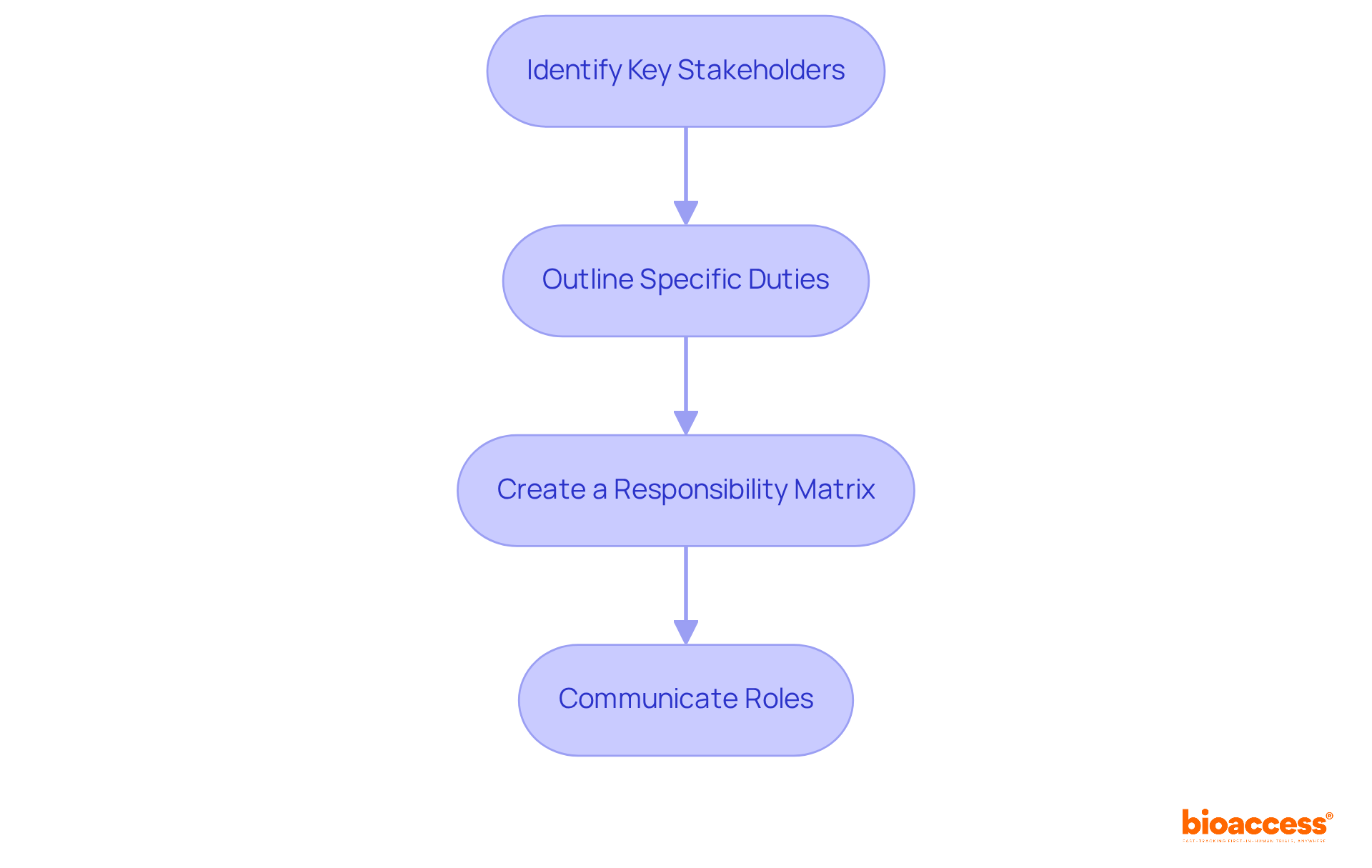
Identify Key Stakeholders: Start by listing all stakeholders involved in the trial, including central lab personnel, regional lab staff, clinical trial coordinators, and investigators. Recognizing each party's role is crucial for effective collaboration.
Outline Specific Duties: Clearly define the responsibilities of each stakeholder. For instance, coordinating central and local labs in Serbian trials typically means that central labs manage standardized testing and data management, while local labs focus on sample collection and immediate testing. This delineation helps prevent overlap and ensures accountability.
Create a Responsibility Matrix: Develop a RACI (Responsible, Accountable, Consulted, Informed) matrix to visualize task assignments. This matrix clarifies who is responsible for each task, enhancing accountability and streamlining communication. As noted by experts, a well-structured RACI chart can significantly improve project outcomes by preventing confusion and ensuring that every task has a designated owner.
Communicate Roles: Enhance understanding of roles and responsibilities among group members through regular meetings or training sessions. Effective communication fosters collaboration and minimizes confusion during the trial, ensuring that all stakeholders are aligned and informed about their contributions.
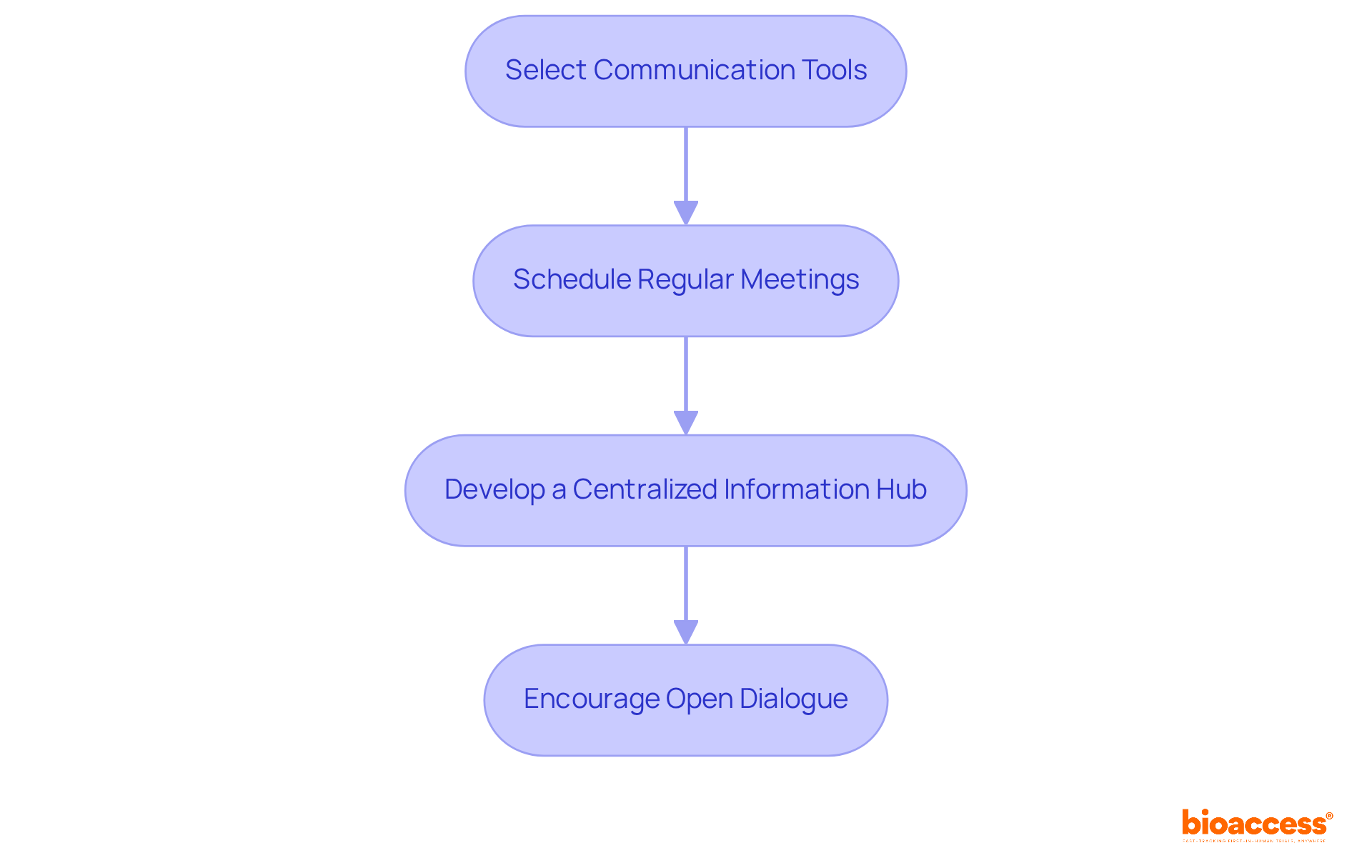
Select Communication Tools: Choose effective communication tools tailored for your group, such as email, project management software, or instant messaging platforms. Ensure that all group members have access to these tools to facilitate seamless interaction.
Schedule Regular Meetings: Establish a routine of regular check-ins, ideally weekly or bi-weekly, to discuss progress, address challenges, and share updates. This practice keeps the group informed and engaged, fostering a collaborative environment.
Develop a Centralized Information Hub: Implement a shared platform, such as Google Drive or a dedicated intranet, to store all trial-related documents, updates, and protocols. This central repository ensures that everyone has access to the most current information, enhancing transparency and coordination.
Encourage Open Dialogue: Foster an environment where group members feel motivated to express concerns or recommendations. This can be facilitated through anonymous feedback tools or an open-door policy, which helps to build trust and improve team dynamics.
Familiarize with Local Regulations: Begin by thoroughly reviewing the guidelines set forth by the Serbian Medicines and Medical Devices Agency (ALIMS) and relevant EU regulations that govern clinical studies. Understanding these regulations is crucial for navigating the approval process effectively, especially since most clinical study applications receive approval well within the 60-day review period.
Obtain Necessary Approvals: It's essential to secure all required approvals from ALIMS and local ethics committees before initiating the study. This includes submitting trial protocols and informed consent documents, which are vital for ensuring compliance and maintaining ethical integrity. Notably, the streamlined procedures of ethics committees typically result in approvals within 30 days, showcasing the efficiency of the Serbian regulatory framework.
Conduct Training on Compliance: Implement comprehensive training sessions for all team members, focusing on the specific regulatory requirements and ethical considerations relevant to Serbia. This training ensures that every participant understands their responsibilities and the importance of adhering to regional standards, including the appointment of a representative to facilitate compliance. bioaccess® provides expert services in this area, equipping teams to meet local regulations, including feasibility assessments and the selection of research sites and principal investigators.
Implement Monitoring Mechanisms: Establish robust processes for ongoing compliance oversight throughout the study. This should include regular audits and systematic assessments of documentation to ensure continuous adherence to regulations, thereby enhancing the integrity and success of the clinical study. Additionally, understanding and complying with transparency laws is vital for bolstering research credibility and public trust. bioaccess® offers extensive project management and oversight services, ensuring that all aspects of the study remain compliant and efficient.

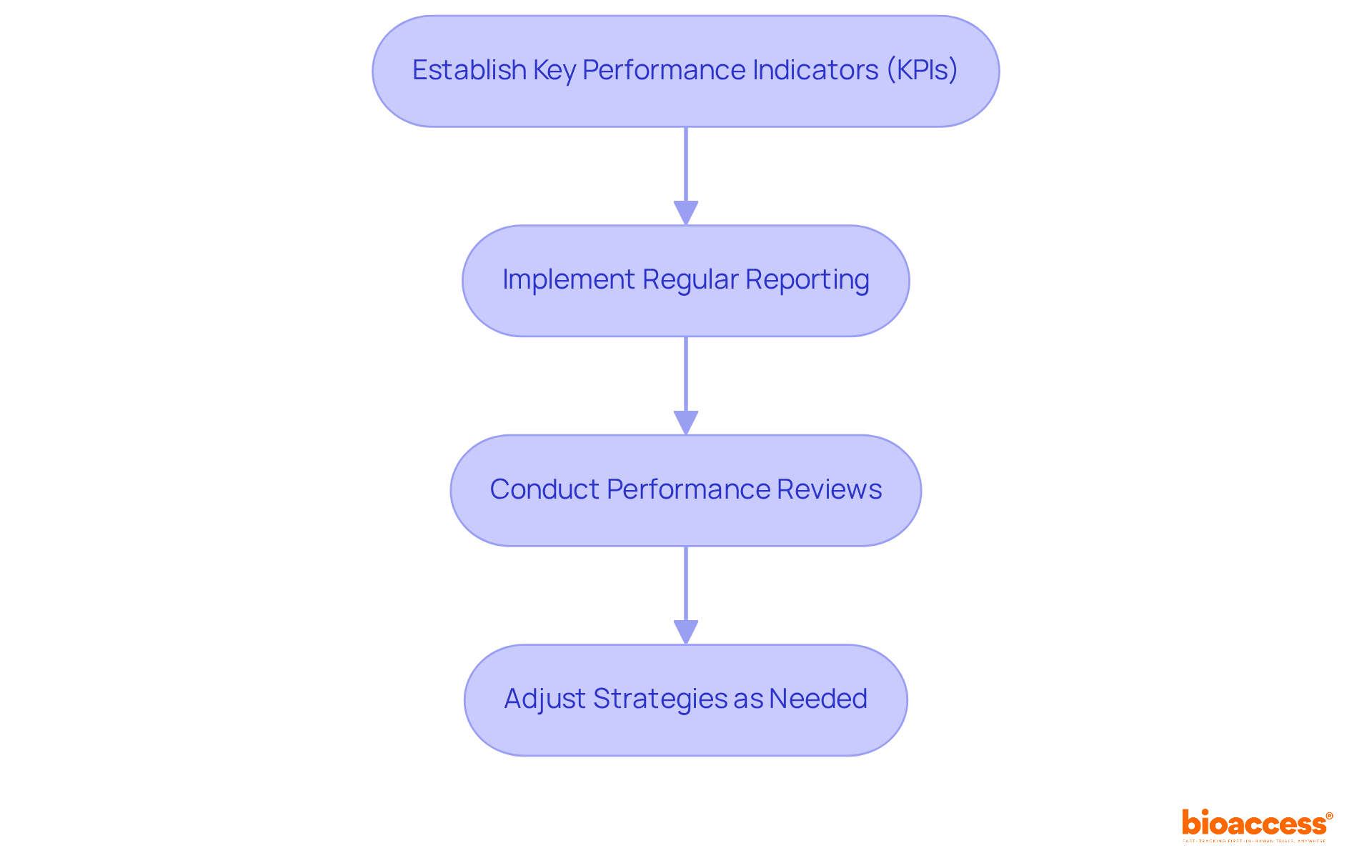
Establishing Key Performance Indicators (KPIs) is crucial for coordinating central and local labs in Serbian trials. These include turnaround times for test results, accuracy rates, adherence to protocols, and test precision. Such metrics serve as benchmarks for assessing lab performance and ensuring compliance with standards. By leveraging bioaccess's expertise in feasibility studies and compliance reviews, the effectiveness of these KPIs can be significantly enhanced.
Implement Regular Reporting: A systematic reporting framework is essential, where labs provide performance data at consistent intervals. This data should be analyzed by the trial management group to identify trends, highlight areas needing improvement, and ensure alignment with trial objectives. Regular monitoring of KPIs is vital for maintaining operational health and striving for continuous improvement, especially when coordinating central and local labs in Serbian trials.
Conduct Performance Reviews: Regular performance evaluations with lab groups are necessary to discuss the collected data, address challenges, and recognize achievements. This practice fosters accountability and nurtures a culture of ongoing enhancement within the groups. Clinical study managers have observed that consistent performance reporting is essential for upholding high standards and ensuring that all team members align with study objectives, especially in the context of bioaccess's commitment to managing clinical research successfully.
Adjust Strategies as Needed: It is imperative to be prepared to modify strategies based on performance evaluations. This may involve providing additional training to lab staff or refining processes to enhance overall performance and effectively achieve project objectives. Furthermore, customer satisfaction should be regarded as a key indicator of laboratory effectiveness, reflecting the quality of service provided and the accuracy of test results, which aligns with bioaccess's focus on delivering high-quality clinical trial services.
Coordinating central and local labs in clinical trials is not just important; it’s essential for conducting research efficiently and effectively. By clearly defining roles and responsibilities, establishing robust communication channels, ensuring compliance with regulatory standards, and monitoring lab performance, stakeholders can collaborate to achieve successful trial outcomes. This structured approach enhances collaboration and supports the integrity of the research process.
Key insights reveal:
These steps are critical in navigating the complexities of clinical trials in Serbia, where adherence to local regulations and ethical standards is paramount for gaining approvals and maintaining public trust.
Ultimately, the success of coordinating central and local labs hinges on a commitment to transparency, accountability, and continuous improvement. By implementing these best practices, teams can foster a collaborative environment that not only meets regulatory requirements but also enhances the quality and reliability of clinical research. Embracing these strategies will lead to more efficient trials and better health outcomes, reinforcing the vital role of effective lab coordination in advancing medical science.
What is the first step in defining roles and responsibilities for central and local labs in clinical trials?
The first step is to identify all stakeholders involved in the trial, including central lab personnel, regional lab staff, clinical trial coordinators, and investigators.
Why is it important to outline specific duties for each stakeholder?
Clearly defining the responsibilities of each stakeholder helps prevent overlap, ensures accountability, and facilitates effective collaboration among all parties involved in the trial.
What does the responsibility matrix (RACI) help achieve?
A RACI matrix helps visualize task assignments by clarifying who is Responsible, Accountable, Consulted, and Informed for each task, enhancing accountability and streamlining communication.
How can a well-structured RACI chart impact project outcomes?
A well-structured RACI chart can significantly improve project outcomes by preventing confusion and ensuring that every task has a designated owner.
What methods can be used to communicate roles effectively among group members?
Regular meetings or training sessions can be used to enhance understanding of roles and responsibilities among group members, fostering collaboration and minimizing confusion during the trial.