

Recruiting patients for wearable trials in Romania poses a unique challenge that demands a strategic approach tailored to the local healthcare landscape. By grasping the specific demographics and health concerns of the Romanian population, researchers can effectively engage potential participants, thereby enhancing the success of their studies. But how can one navigate the complexities of patient recruitment in a manner that not only attracts participants but also builds trust and fosters long-term relationships with healthcare providers? This article outlines five essential steps to streamline the recruitment process, ensuring that wearable trials are not only successful but also beneficial for the communities they aim to serve.
To effectively recruit patients for wearable trials in Romania, it’s crucial to identify the specific demographics that align with your study's objectives. Key factors to consider include age, gender, prevalent health conditions, and lifestyle characteristics. For instance, if your trial targets cardiovascular health, focus on middle-aged individuals with a history of heart disease, as this group is more likely to benefit from wearable technology. With Romania's median age at 40 years and approximately 39.9% of the population reporting chronic diseases, tailoring your recruitment strategy is essential.
Utilizing local health statistics and databases from Romanian health authorities can provide valuable insights into prevalent health issues. Engaging with local healthcare providers is another effective strategy. Collaborating with doctors and clinics can help you gather information about the availability of individuals and the most common health conditions in the area. Notably, 58.4% of respondents strongly agreed that medical researchers care about the best interests of individuals, which can foster trust and encourage participation.
Additionally, exploring existing patient registries can grant access to individuals who meet your inclusion criteria. These registries often contain valuable demographic information that can enhance your recruitment efforts. By applying these strategies, you can ensure that your recruitment process is focused and effective, particularly in recruiting patients for wearable trials in Romania, ultimately leading to a successful testing outcome.

Creating captivating recruitment materials is essential for effectively recruiting patients for wearable trials in Romania. Start by developing brochures, flyers, and digital content that clearly convey the initiative's purpose, benefits, and requirements. Use straightforward language and compelling visuals to enhance accessibility. Emphasize the advantages of participation, such as access to innovative technology and potential health improvements, which align with bioaccess's commitment to advancing medical technologies through quality healthcare. Incorporating testimonials from previous participants fosters trust and encourages enrollment. Additionally, ensure that all materials adhere to ethical guidelines and include essential contact information for inquiries.
Considering that around 80% of clinical studies are postponed due to enrollment difficulties, it is crucial to emphasize efficient strategies for recruiting patients for wearable trials in Romania. As Matthew Graffeo states, "Strategies guiding the future of successful clinical study enrollment must be proactive and consistently refined." Customizing your recruitment materials to tackle specific challenges can significantly improve participant engagement and enrollment, ultimately aiding in the success of studies conducted by bioaccess.

To effectively recruit patients for wearable trials in Romania, it's essential to implement a multi-channel outreach approach that encompasses social media platforms, local community events, healthcare provider networks, and online user forums. Each channel offers unique advantages: social media is particularly effective in engaging younger demographics, while community events can draw in older populations. Tailor your messaging for each platform to resonate with the specific audience, ensuring clarity and relevance.
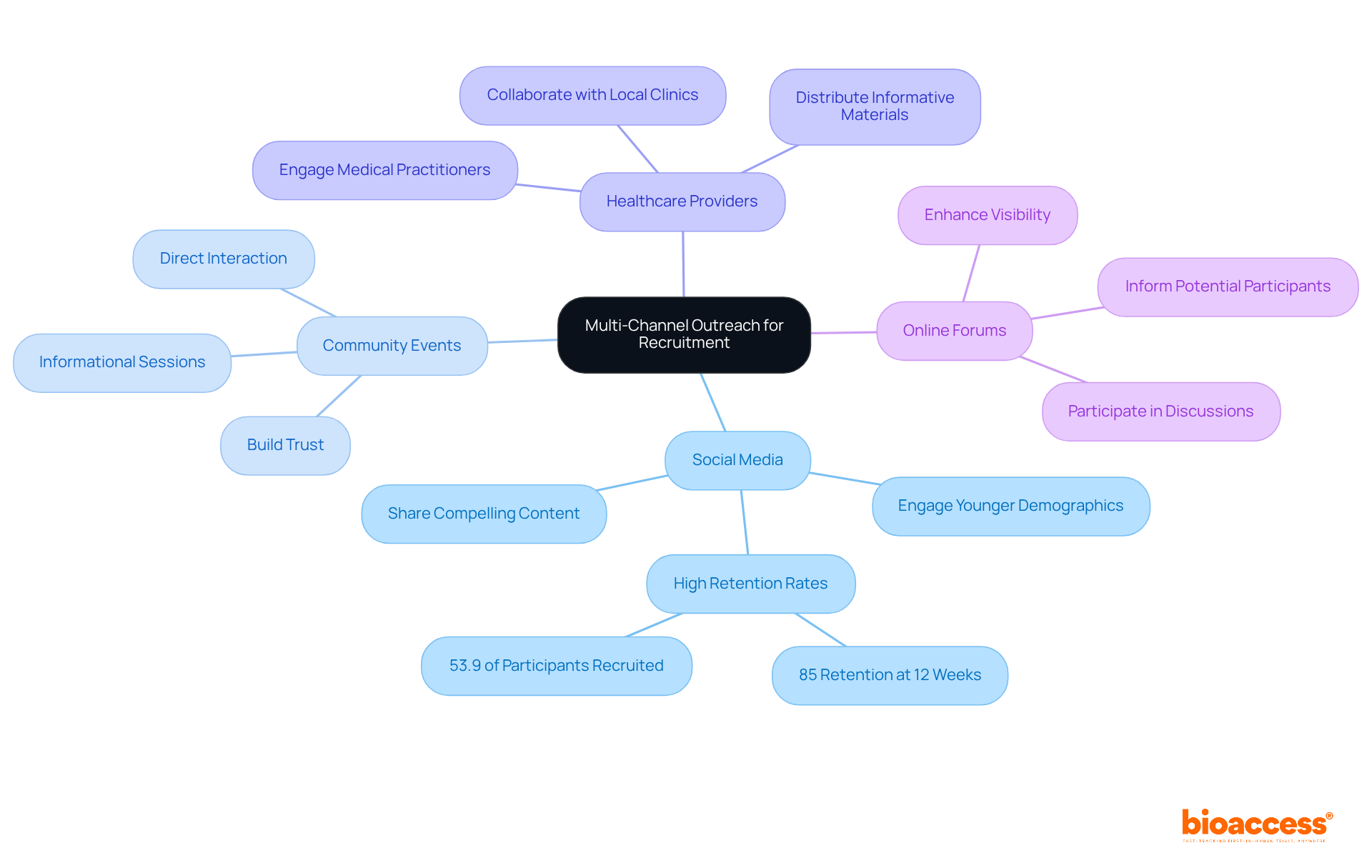
Forming collaborations with local medical providers is essential for recruiting patients for wearable trials in Romania. These providers serve as reliable sources of information, significantly influencing participant involvement. Begin by identifying key medical facilities and professionals in your target area, such as hospitals and specialized clinics. Schedule meetings to present your study's goals and advantages, highlighting how participation can deepen medical understanding and improve care for individuals.
To ensure effective communication, conduct training sessions for healthcare personnel, equipping them with the necessary information to discuss the study's significance with potential participants. This approach not only fosters trust but also empowers providers to refer individuals with confidence.
By leveraging the influence of healthcare professionals, you can significantly enhance participant involvement and enrollment in recruiting patients for wearable trials in Romania.

To ensure the success of your patient engagement efforts in recruiting patients for wearable trials in Romania, it is essential to implement a robust system for monitoring and adapting your strategies. Establish key performance indicators (KPIs) to assess hiring success, focusing on metrics such as enrollment rates and participant feedback, which align with bioaccess's commitment to quality. Regular evaluations of your outreach channels and hiring materials are crucial to determine their effectiveness. Gathering feedback from participants and healthcare providers will help identify areas for improvement, allowing you to refine your approach. Flexibility is key; be prepared to pivot your strategies based on data insights and evolving circumstances to enhance engagement and enrollment rates while recruiting patients for wearable trials in Romania, leveraging Bioaccess's expertise in managing Early-Feasibility, First-In-Human, Pilot, Pivotal, and Post-Market Follow-Up studies.

Recruiting patients for wearable trials in Romania demands a strategic approach that not only understands target demographics but also creates engaging materials, utilizes multiple outreach channels, and establishes partnerships with healthcare providers. By focusing on these critical areas, researchers can significantly enhance their ability to attract participants who stand to benefit from innovative wearable technology, ultimately driving advancements in healthcare.
This article underscores the necessity of tailoring recruitment strategies to specific patient demographics. Effective communication and compelling materials that resonate with potential participants are essential. Utilizing social media, community events, and collaborations with local healthcare providers are vital tactics for reaching diverse populations. Moreover, ongoing evaluation and adaptation of these strategies ensure that recruitment efforts remain effective and responsive to the evolving needs of both participants and researchers.
In conclusion, the success of wearable trials hinges on a proactive and well-coordinated recruitment strategy. By leveraging local insights, fostering trust through partnerships, and continuously refining approaches based on feedback and data, stakeholders can significantly improve patient engagement and enrollment. Embracing these practices not only enhances the likelihood of successful trials but also lays the groundwork for future innovations in healthcare technology in Romania.
Why is it important to identify target patient demographics for wearable trials in Romania?
Identifying target patient demographics is crucial for effectively recruiting patients that align with the study's objectives, such as age, gender, prevalent health conditions, and lifestyle characteristics.
What key demographic factors should be considered when recruiting patients for wearable trials?
Key factors include age, gender, prevalent health conditions, and lifestyle characteristics relevant to the study's focus, such as targeting middle-aged individuals with a history of heart disease for cardiovascular health trials.
What is the median age and chronic disease prevalence in Romania?
Romania's median age is 40 years, and approximately 39.9% of the population reports having chronic diseases.
How can local health statistics assist in patient recruitment?
Utilizing local health statistics and databases from Romanian health authorities can provide insights into prevalent health issues, aiding in the recruitment process.
What role do local healthcare providers play in patient recruitment?
Engaging with local healthcare providers, such as doctors and clinics, helps gather information about available individuals and common health conditions in the area, enhancing recruitment efforts.
How can existing patient registries be beneficial for recruitment?
Existing patient registries can grant access to individuals who meet inclusion criteria and often contain valuable demographic information to enhance recruitment strategies.
What are some effective strategies for creating recruitment materials?
Effective strategies include developing brochures and digital content that clearly convey the initiative's purpose and benefits, using straightforward language and compelling visuals, and incorporating testimonials from previous participants.
Why is it important to highlight the benefits of participation in recruitment materials?
Emphasizing the advantages of participation, such as access to innovative technology and potential health improvements, fosters interest and encourages enrollment.
What should be included in recruitment materials to ensure credibility?
Recruitment materials should include testimonials from previous participants to enhance trust and credibility, demonstrating the positive impact of involvement in studies.
How can compliance with regulations be ensured in recruitment materials?
Collaborating with legal and ethical teams to review materials ensures they meet all regulatory requirements, which is crucial for maintaining ethical standards in clinical studies.
What is the impact of enrollment difficulties on clinical studies?
Around 80% of clinical studies are postponed due to enrollment difficulties, highlighting the need for efficient recruitment strategies to improve participant engagement and enrollment.
How can recruitment materials be customized for better engagement?
Customizing recruitment materials to address specific challenges can significantly improve participant engagement and enrollment, aiding in the success of the studies.