
Master Good Clinical Practice Enforcement by NAMMD for Compliance Success

Introduction

The enforcement of Good Clinical Practice (GCP) by the National Agency for Medicines and Medical Devices (NAMMD) is essential for upholding the integrity and safety of clinical research involving human subjects. By adhering to internationally accepted ethical standards, researchers not only protect participants but also bolster the credibility of their findings. Yet, a pressing question arises: how can organizations ensure compliance in the face of evolving regulations and the complexities inherent in clinical trials? This article explores the fundamental principles of GCP, the enforcement mechanisms utilized by NAMMD, and the best practices for cultivating a culture of compliance that ultimately drives successful research outcomes.

Understand the Core Principles of Good Clinical Practice

The good clinical practice enforcement by nammd serves as a vital framework of internationally accepted ethical and scientific quality standards, essential for the design, conduct, recording, and reporting of studies involving human subjects. The core principles include:

  1. Ethical Conduct: Trials must adhere to ethical principles rooted in the Declaration of Helsinki, ensuring that the rights and welfare of participants are prioritized.
  2. Informed Consent: Participants must receive comprehensive information about the study, enabling them to provide voluntary and informed consent. Recent cases highlight the consequences of failing to secure proper consent, with the FDA issuing warnings for violations that jeopardized participant safety and data integrity.
  3. Data Integrity: All information gathered during experiments must be accurate, reliable, and verifiable. Documentation deficiencies have been identified as a common issue in GCP inspections, underscoring the need for meticulous record-keeping.
  4. Participant Safety: The safety and well-being of study participants must be the primary concern throughout the research. Ethical lapses can lead to significant regulatory repercussions, underscoring the need for good clinical practice enforcement by nammd, particularly in instances where inadequate oversight resulted in adverse events.
  5. Compliance with Protocols: Strict adherence to the approved study protocol is mandatory. Deviations from the protocol are frequently cited as a leading deficiency in inspections, emphasizing the importance of maintaining protocol integrity.

At bioaccess®, we recognize that understanding and adhering to these principles is crucial for researchers and sponsors to ensure compliance with regulatory standards and uphold the integrity of research. Our comprehensive research study management services - including feasibility assessments, site selection, regulatory reviews, study setup, import permits, project management, and reporting - are designed to support the successful execution of research initiatives. We foster international collaboration and contribute to local economic growth in Latin America, addressing key challenges in the Medtech landscape.

The central node represents the main topic, while each branch highlights a key principle. Follow the branches to explore each principle and its importance in clinical research.

Explore NAMMD's Enforcement Mechanisms for GCP Compliance

The National Agency for Medicines and Medical Devices (NAMMD) is essential for the good clinical practice enforcement by NAMMD in Romania. This agency's commitment to maintaining high standards in clinical research is underscored by several key enforcement mechanisms:

  • Regular Inspections: NAMMD conducts systematic evaluations of clinical research locations to ensure compliance with GCP guidelines. This process guarantees that studies are carried out ethically and safely, safeguarding participant welfare.
  • Monitoring Reports: The agency meticulously reviews monitoring reports submitted by sponsors and investigators. This scrutiny not only assesses adherence but also identifies areas ripe for improvement, fostering a culture of continuous enhancement.
  • Penalties for Non-Adherence: NAMMD possesses the authority to impose significant penalties, including fines and the suspension of studies, for any violations of GCP. The good clinical practice enforcement by NAMMD underscores the critical importance of compliance in clinical research.
  • Guidance and Support: To aid researchers in understanding and adhering to GCP requirements, NAMMD provides comprehensive guidance documents and training resources. This support is essential for fostering a knowledgeable research community.

These mechanisms are vital for upholding the integrity of research studies and ensuring participant safety. It is imperative for researchers to remain vigilant and committed to these regulations, as adherence not only protects participants but also enhances the credibility of the research conducted.
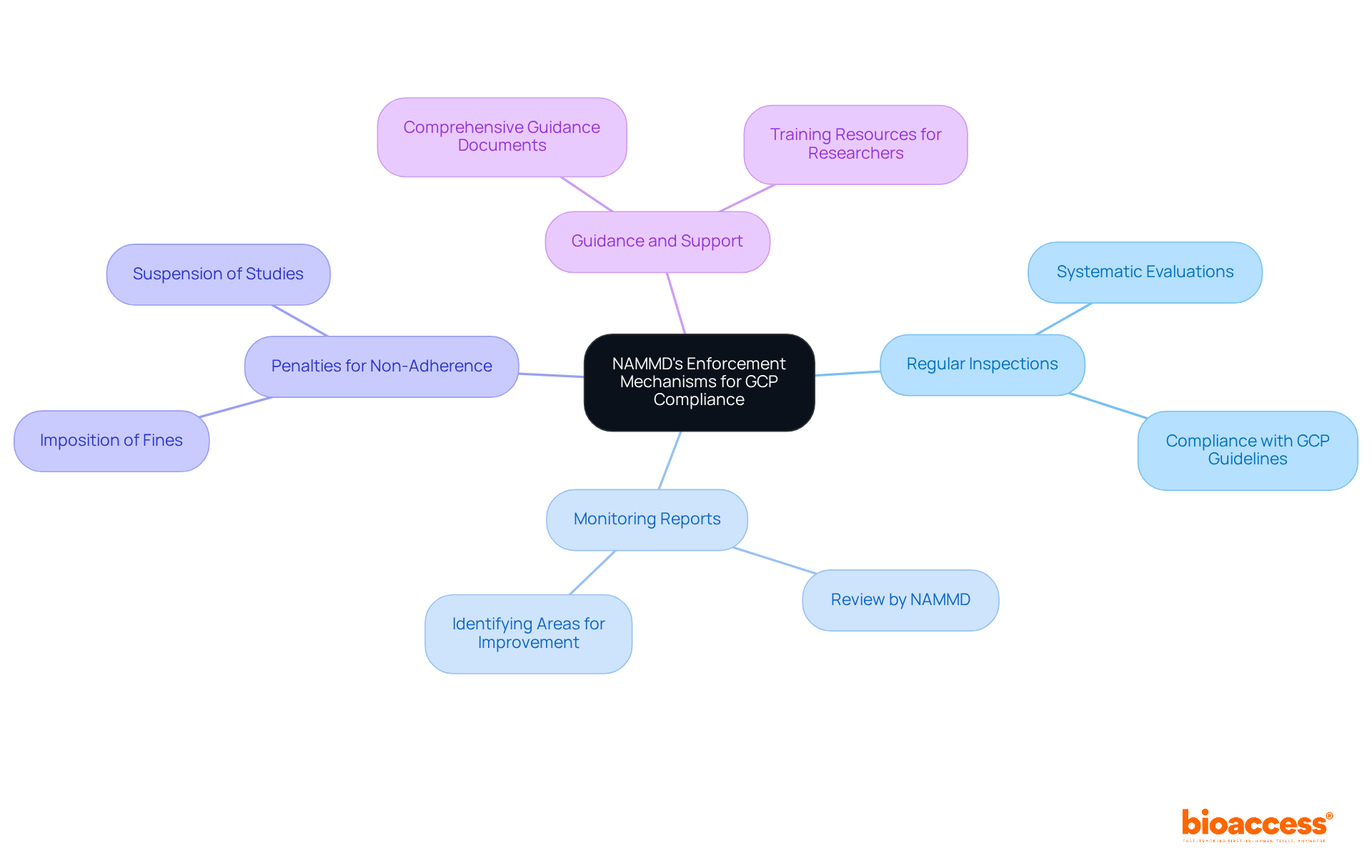
The central node represents NAMMD's role in enforcing GCP. Each branch shows a different mechanism, and the sub-branches provide more details about how each mechanism works to ensure compliance and protect participants.

Implement Effective Training Programs for GCP Compliance

To ensure compliance with GCP, organizations must implement comprehensive training programs that encompass the following essential components:

  1. Preliminary Training: All personnel involved in research studies must complete initial GCP training before engaging in any project. This foundational step is crucial for establishing a solid understanding of GCP principles.

  2. Ongoing Education: Regular refresher courses are necessary to keep staff updated on the latest GCP guidelines and regulatory changes. Continuous learning is vital in the ever-evolving landscape of clinical research.

  3. Role-Specific Training: Customized training should be developed for various roles within the research team, ensuring that each member comprehends their specific responsibilities. Tailored training enhances accountability and effectiveness.

  4. Assessment and Feedback: Implement assessments to evaluate the effectiveness of training programs and gather feedback for continuous improvement. This iterative process is key to refining training efforts and ensuring compliance.

By emphasizing training, organizations can cultivate a culture of adherence, which will ultimately enhance the quality of their clinical studies through good clinical practice enforcement by nammd. The commitment to ongoing education and assessment not only enhances compliance but also drives excellence in research outcomes.

The central node represents the overall goal of effective training. Each branch shows a key component of the training program, with further details available as you explore each section.

Establish Continuous Monitoring and Quality Assurance Practices

Ongoing monitoring and quality assurance are essential for ensuring good clinical practice enforcement by nammd in clinical research. Organizations like bioaccess must take decisive steps to enhance their processes:

  1. Develop a Monitoring Plan: Craft a comprehensive monitoring strategy that details the frequency and scope of activities tailored to the study's risk profile. This plan should reflect the study's complexity and regulatory requirements, enabling effective oversight.
  2. Conduct Regular Audits: Implement systematic evaluations of testing procedures and data to proactively identify and address regulatory issues. Regular audits not only boost transparency but also ensure compliance with regulatory standards.
  3. Utilize Technology: Leverage advanced technology solutions for real-time data monitoring and reporting. Integrating electronic data capture systems and wearable devices allows for continuous tracking of patient outcomes, significantly enhancing data accuracy and reliability.
  4. Engage Quality Assurance Teams: Involve dedicated quality assurance teams to oversee compliance efforts. These teams are crucial in ensuring good clinical practice enforcement by nammd, which bolsters the credibility of study results.
  5. Incorporate Feasibility Studies and Site Selection: Prior to commencing the experiment, conduct thorough feasibility studies and select appropriate research locations to set the study up for success from the beginning.
  6. Ensure Compliance with Import Permits: Manage the importation of investigational devices by securing necessary permits, which is vital for maintaining regulatory compliance throughout the study.

By implementing robust monitoring and quality assurance practices, organizations like bioaccess can significantly enhance the reliability of their trials while safeguarding participant welfare. This proactive approach not only aligns with current technological trends but also reinforces a commitment to ethical conduct in clinical research.
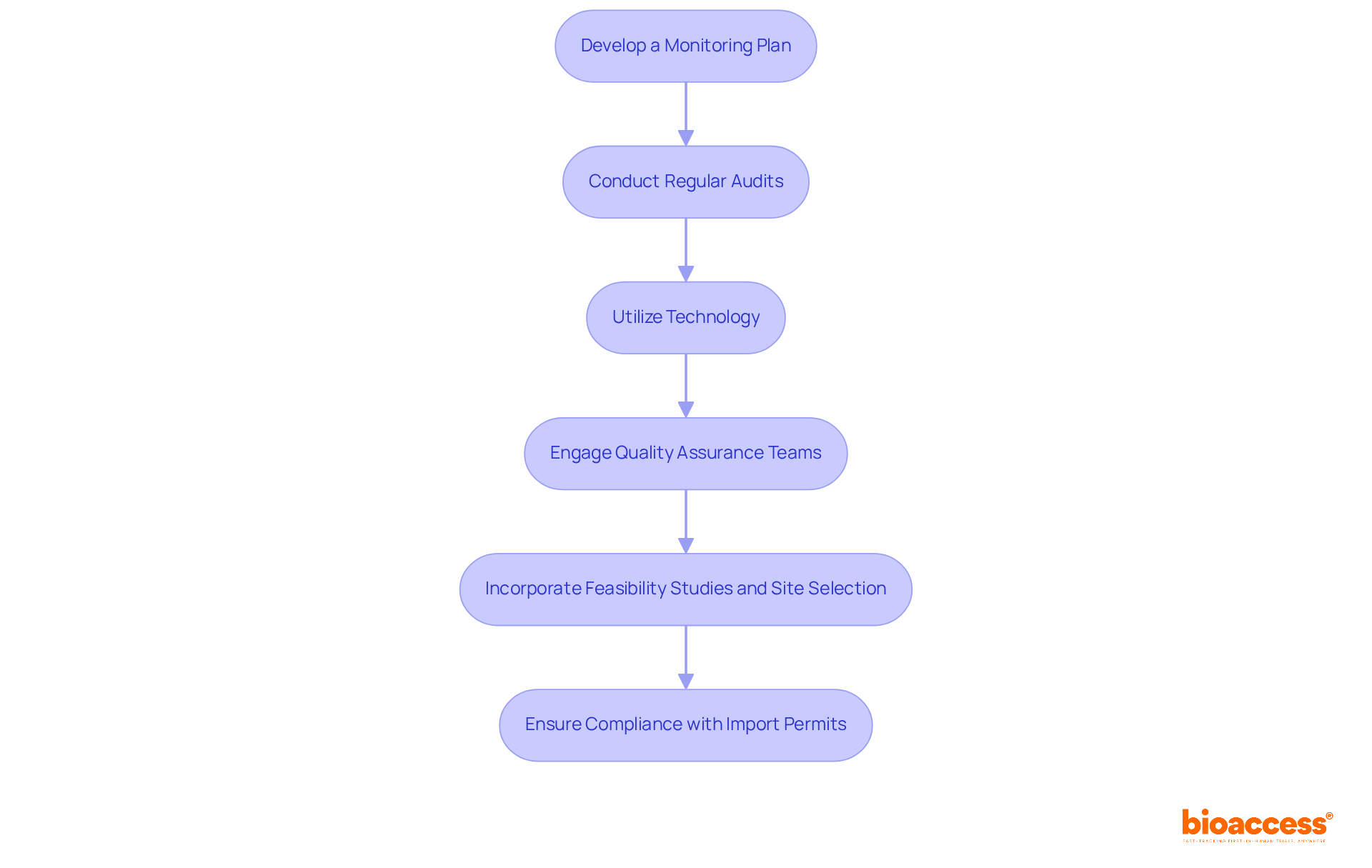
Each box represents a crucial step in the process of ensuring quality and compliance in clinical research. Follow the arrows to see how each step builds on the previous one, leading to enhanced reliability and participant safety.

Conclusão

Good clinical practice (GCP) enforcement by NAMMD is crucial for upholding the ethical and scientific integrity of clinical research. By adhering to principles such as ethical conduct, informed consent, data integrity, participant safety, and strict protocol compliance, researchers can cultivate trust and reliability in their studies. This framework not only protects the rights and welfare of participants but also bolsters the credibility of research outcomes.

Key arguments throughout the article underscore NAMMD's role in enforcing GCP through:

  1. Regular inspections
  2. Monitoring reports
  3. Penalties for non-compliance
  4. Comprehensive guidance

The significance of effective training programs cannot be overstated; these initiatives are vital for equipping research personnel with essential knowledge and skills. Furthermore, continuous monitoring and quality assurance practices guarantee that organizations maintain high standards throughout the research process.

Ultimately, the commitment to good clinical practice is a shared responsibility that transcends mere regulatory compliance. By prioritizing ethical standards and participant welfare, researchers can make substantial contributions to advancing medical knowledge while fostering a culture of accountability and excellence in clinical research. Engaging with NAMMD's enforcement mechanisms and investing in training and monitoring will not only elevate the quality of clinical trials but also ensure that the rights of participants remain central to research efforts.

Frequently Asked Questions

What is good clinical practice (GCP)?

Good clinical practice (GCP) is a framework of internationally accepted ethical and scientific quality standards essential for the design, conduct, recording, and reporting of studies involving human subjects.

What are the core principles of good clinical practice?

The core principles of good clinical practice include ethical conduct, informed consent, data integrity, participant safety, and compliance with protocols.

How does ethical conduct relate to GCP?

Ethical conduct in GCP ensures that trials adhere to principles rooted in the Declaration of Helsinki, prioritizing the rights and welfare of participants.

What is the importance of informed consent in clinical trials?

Informed consent is crucial as it requires participants to receive comprehensive information about the study, enabling them to provide voluntary and informed consent. Failure to secure proper consent can lead to regulatory warnings and jeopardize participant safety and data integrity.

Why is data integrity important in clinical research?

Data integrity is vital because all information gathered during experiments must be accurate, reliable, and verifiable. Documentation deficiencies are a common issue in GCP inspections, highlighting the need for meticulous record-keeping.

What does participant safety entail in the context of GCP?

Participant safety entails ensuring the safety and well-being of study participants as the primary concern throughout the research. Ethical lapses can lead to significant regulatory repercussions.

What is the significance of compliance with protocols in GCP?

Compliance with protocols is mandatory as strict adherence to the approved study protocol is crucial. Deviations from the protocol are often cited as leading deficiencies in inspections.

How does bioaccess® support researchers and sponsors in adhering to GCP?

Bioaccess® provides comprehensive research study management services, including feasibility assessments, site selection, regulatory reviews, study setup, import permits, project management, and reporting, to support the successful execution of research initiatives while ensuring compliance with regulatory standards.

List of Sources

  1. Understand the Core Principles of Good Clinical Practice
  • Good Clinical Practice (GCP): The 13 Principles Explained | IntuitionLabs (https://intuitionlabs.ai/articles/good-clinical-practice-13-principles)
  • 70 Research Quotes to Inspire Your Work - Qualtrics (https://qualtrics.com/articles/strategy-research/research-quotes)
  • Guidance for Industry (https://fda.gov/regulatory-information/search-fda-guidance-documents/e6r3-good-clinical-practice-gcp)
  • Clinical Research Compliance News - UNC Research (https://research.unc.edu/clinical-research-compliance/news)
  • TOP 10 CLINICAL TRIALS QUOTES | A-Z Quotes (https://azquotes.com/quotes/topics/clinical-trials.html)
  1. Explore NAMMD's Enforcement Mechanisms for GCP Compliance
  • Press releases – NAMMDR (https://anm.ro/en/agentie/comunicate-de-presa)
  • Achieving Micron-Level Accuracy in Medical Device Manufacturing (https://atsindustrialautomation.com/case_studies/achieving-micron-level-accuracy-in-medical-device-manufacturing)
  1. Implement Effective Training Programs for GCP Compliance
  • Good Statistical Practice—development of tailored Good Clinical Practice training for statisticians - PMC (https://pmc.ncbi.nlm.nih.gov/articles/PMC10858586)
  • Top Training Programs for GCP Compliance in 2025 - JAF Consulting, Inc. (https://jafconsulting.com/top-training-programs-for-gcp-compliance-in-2025)
  • CenExel Hosts Comprehensive Good Clinical Practice (GCP) Training to Strengthen Clinical Excellence Across Network (https://naplesnews.com/press-release/story/68817/cenexel-hosts-comprehensive-good-clinical-practice-gcp-training-to-strengthen-clinical-excellence-across-network)
  • Good Clinical Practice Training: Identifying Key Elements and Strategies for Increasing Training Efficiency - PMC (https://pmc.ncbi.nlm.nih.gov/articles/PMC4923807)
  • Effectiveness of a continuous training program on knowledge and professional development of healthcare providers in healthy community clinics in Jordan: a quasi-experimental study - PMC (https://pmc.ncbi.nlm.nih.gov/articles/PMC12090590)
  1. Establish Continuous Monitoring and Quality Assurance Practices
  • Continuous Monitoring in Clinical Trials: Moving Towards a Value-Rich Model (https://aardexgroup.com/moving-clinical-trials-towards-the-value-rich-model-of-continuous-monitoring)
  • The Impact of Quality Assurance on Clinical Trial Outcomes - FDAMapClinical (https://fdamapclinical.com/blogs/the-impact-of-quality-assurance-on-clinical-trial-outcomes)
  • Monitoring and quality assurance standards for clinical researchers at the U - @theU (https://attheu.utah.edu/announcements/monitoring-quality-assurance-standards-for-clinical-researchers-at-the-u)
  • Clinical Trial Monitoring: Key Strategies | Credevo Articles (https://credevo.com/articles/2024/06/25/clinical-trial-monitoring-key-strategies)
Author: Bioaccess Content Team