

In the realm of clinical research, the ethical and legal frameworks governing participant safety hold paramount importance, especially in Croatia. The country’s stringent clinical trial indemnity obligations not only protect the rights of participants but also create a robust compensation system for injuries or adverse effects. As stakeholders navigate these complex regulations, they face a critical question: how can sponsors and researchers ensure compliance while fostering trust and transparency with participants?
This article delves into the intricacies of clinical trial indemnity in Croatia, exploring the responsibilities of all parties involved and the mechanisms designed to safeguard those who contribute to vital medical advancements. By understanding these frameworks, stakeholders can better navigate the challenges of clinical research, ensuring that participant safety remains at the forefront.
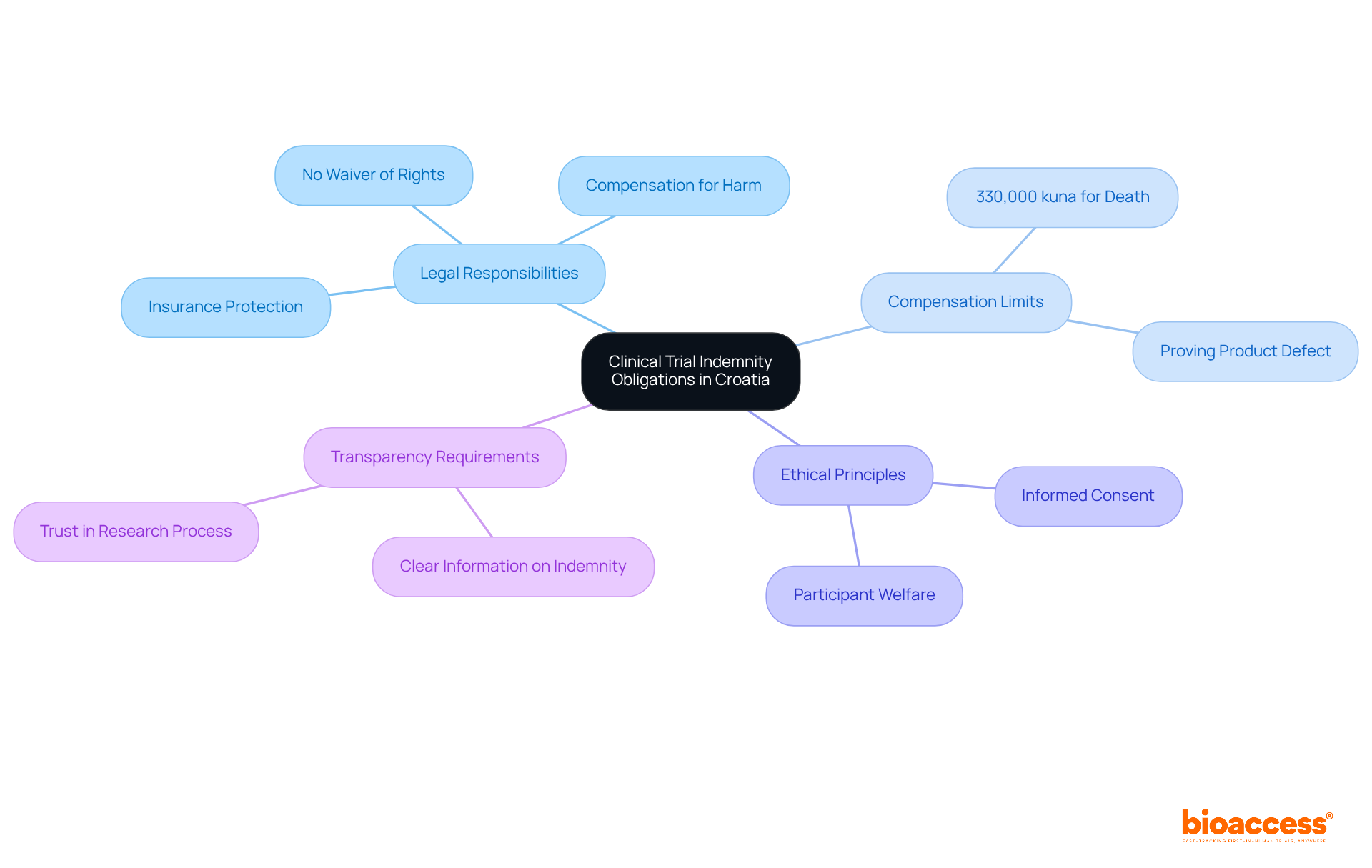
In Croatia, the clinical trial indemnity obligations in Croatia encompass the legal responsibilities of backers to compensate individuals for any harm or injury sustained during their involvement in a research study. This obligation is grounded in ethical research principles, aimed at protecting the rights and welfare of participants. The Croatian legal system mandates that backers secure sufficient insurance protection to manage potential liabilities related to clinical trial indemnity obligations in Croatia. This includes measures for compensation in cases of injury or death related to the trial, ensuring that individuals have recourse in the event of adverse outcomes, in line with clinical trial indemnity obligations in Croatia.
Notably, the consent form must not contain language that waives legal rights or releases parties from liability for negligence, reinforcing the legal responsibilities of sponsors. Statistically, the maximum compensation for death in Croatia is set at 330,000 kuna, reflecting the seriousness with which the legal system treats individual welfare. Furthermore, the injured party must prove the defect of a product, damage, and causality between the product defect and damage, which is integral to the liability framework in Croatia.
Sponsors are also required to provide clear information about clinical trial indemnity obligations in Croatia regarding compensation for trial-related injuries, ensuring transparency and trust in the research process. For instance, numerous sponsors have effectively compensated individuals in studies, underscoring the significance of ethical behavior and the safety of those involved. This framework not only safeguards participants but also enhances the credibility of research in Croatia.
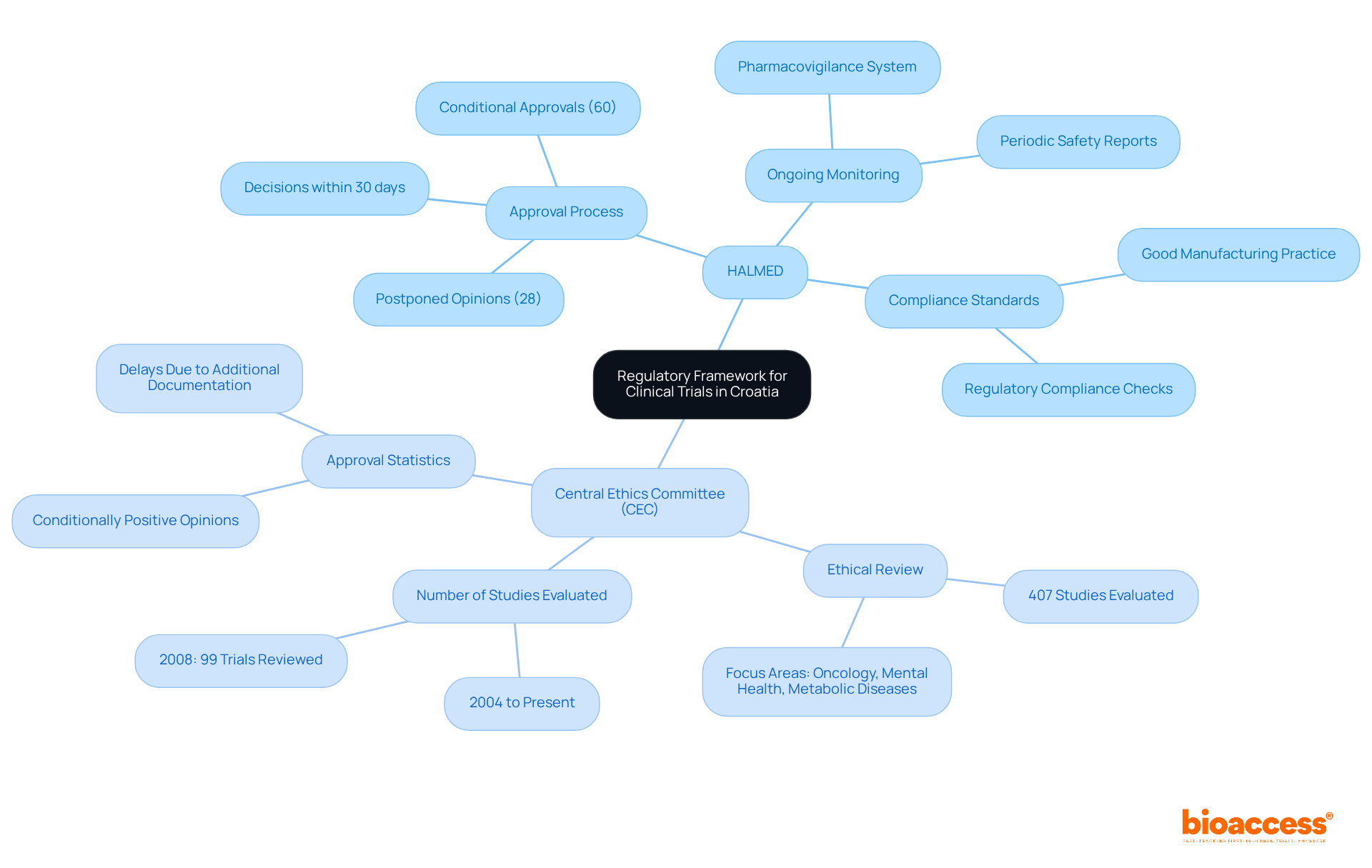
The regulatory framework governing research studies in Croatia is primarily shaped by the Clinical Trials Act and the Medical Devices Act, both of which align with EU regulations. At the forefront of this structure is the Agency for Medicinal Products and Medical Devices (HALMED), serving as the main authority overseeing clinical investigations. HALMED is responsible for both the approval and ongoing monitoring of these studies, ensuring compliance with established standards.
In addition to HALMED, the Central Ethics Committee (CEC) plays a vital role in the research landscape. This committee reviews research protocols to uphold ethical standards, having evaluated 407 studies since its establishment in 2004. A significant portion of these studies focuses on critical areas such as oncology, mental health, and metabolic diseases. Notably, 60% of applications received a conditionally positive opinion during initial assessments. However, 28% required additional documentation, which led to delays in the approval process.
Understanding the functions of these regulatory bodies is crucial for both funders and researchers. It enables them to navigate the approval process effectively and ensures adherence to legal requirements. Recent modifications to the approval procedure have streamlined timelines, with HALMED aiming to provide decisions within 30 days of receiving complete documentation. This change significantly enhances the efficiency of initiating research in Croatia, making it imperative for stakeholders to stay informed and engaged in the evolving regulatory landscape.
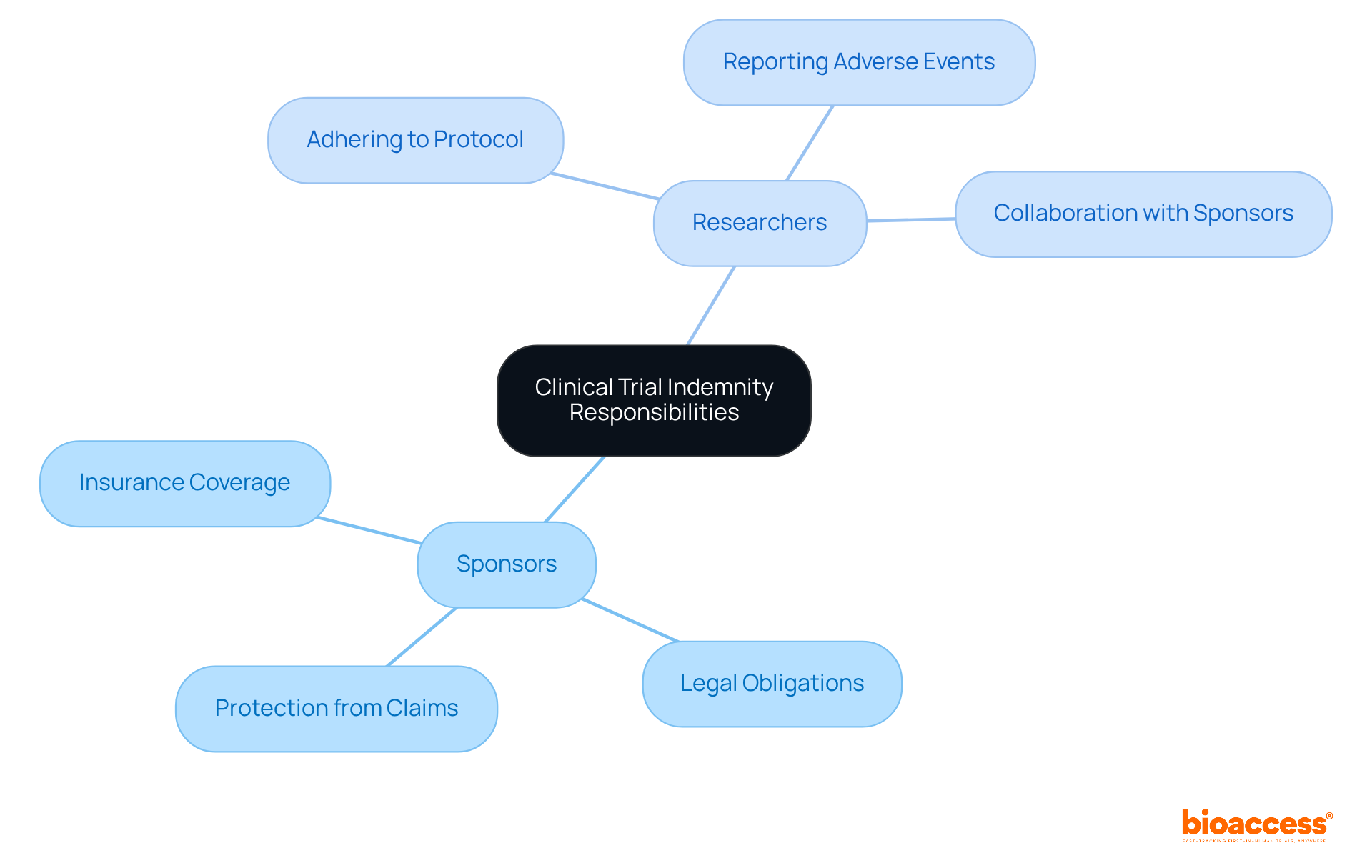
In Croatia, backers bear the primary responsibility for establishing adequate clinical trial indemnity obligations in Croatia to address potential liabilities associated with clinical studies. This involves securing appropriate insurance coverage that meets the legal requirements set forth in Croatian law. Specifically, the legal framework mandates that backers protect researchers and organizations from claims arising from the study, except in cases of malpractice or negligence.
Researchers are tasked with adhering to the study protocol and ensuring the well-being of subjects. They must promptly report any adverse events to both the funder and regulatory authorities. Successful collaboration between sponsors and researchers is essential to fulfill the clinical trial indemnity obligations in Croatia, thereby safeguarding the rights and welfare of study participants.
Notably, only 6% of surveyed patients actively participated in a research study, underscoring the critical need for clear communication regarding indemnity and participant safety. As Ivana Šolić, a medical student at the University of Split, pointed out, "The low awareness and involvement of patients in research studies noted in our investigation may be associated with low transparency of such studies in Croatia." This observation highlights the importance of comprehensive insurance protection and transparency in mitigating risks related to research liabilities.
In Croatia, the protection of subjects in clinical studies is paramount and is ensured by stringent regulatory requirements, which include clinical trial indemnity obligations in Croatia. Sponsors, such as bioaccess, must provide comprehensive details about trials, including potential risks and benefits, empowering individuals to make informed decisions. In cases of injury or adverse effects, established compensation systems are in place to support affected individuals financially. These mechanisms typically cover medical expenses, lost wages, and other related costs, ensuring that participants are not left to shoulder the financial burden of their involvement in research studies.
Moreover, Croatian law mandates that sponsors uphold clinical trial indemnity obligations in Croatia to facilitate these compensations, reinforcing a commitment to the well-being of all involved. This insurance not only protects participants but also ensures that sponsors are prepared to address any claims arising from study-related injuries, in compliance with clinical trial indemnity obligations in Croatia, thereby fostering a safer research environment. Additionally, bioaccess offers extensive trial management services, including:
These services collectively enhance the integrity and efficiency of research in Croatia.
The impact of these medtech clinical studies extends beyond participant safety; they contribute significantly to local economies through job creation, economic growth, healthcare improvement, and international collaboration. As we consider the future of clinical research, the importance of collaboration and robust support systems cannot be overstated.

In Croatia, understanding clinical trial indemnity obligations is crucial for ensuring the safety and rights of participants involved in research studies. The legal framework mandates that sponsors not only secure adequate insurance coverage but also provide transparent information regarding potential risks and compensation mechanisms. This commitment to participant welfare underscores the ethical principles guiding clinical research in the country.
The responsibilities of sponsors and researchers, along with the regulatory framework enforced by authorities like HALMED and the Central Ethics Committee, are pivotal in this context. These elements are essential for participant protection through established compensation systems. Each aspect plays a vital role in fostering trust and credibility within the research community, ultimately benefiting both participants and the integrity of clinical trials.
As the landscape of clinical research in Croatia continues to evolve, stakeholders must remain vigilant and informed about indemnity obligations and regulatory requirements. The collaborative efforts of sponsors, researchers, and regulatory bodies are essential in creating a safer and more transparent environment for all involved. Emphasizing these principles not only enhances the quality of research but also promotes a culture of ethical responsibility that can lead to significant advancements in healthcare and scientific knowledge.
What are clinical trial indemnity obligations in Croatia?
Clinical trial indemnity obligations in Croatia refer to the legal responsibilities of backers to compensate individuals for any harm or injury sustained during their participation in a research study.
Why are indemnity obligations important in clinical trials?
These obligations are grounded in ethical research principles aimed at protecting the rights and welfare of participants, ensuring they have recourse in the event of adverse outcomes.
What does the Croatian legal system require from backers regarding insurance?
The Croatian legal system mandates that backers secure sufficient insurance protection to manage potential liabilities related to clinical trial indemnity obligations.
What are the maximum compensation limits for death in clinical trials in Croatia?
The maximum compensation for death in Croatia is set at 330,000 kuna.
What must an injured party prove to establish liability in Croatia?
An injured party must prove the defect of a product, damage, and the causality between the product defect and the damage to establish liability.
Are sponsors allowed to include waivers of legal rights in consent forms?
No, the consent form must not contain language that waives legal rights or releases parties from liability for negligence.
What information are sponsors required to provide regarding indemnity obligations?
Sponsors are required to provide clear information about clinical trial indemnity obligations related to compensation for trial-related injuries, ensuring transparency and trust in the research process.
How do sponsors demonstrate ethical behavior in clinical trials?
Numerous sponsors have effectively compensated individuals in studies, highlighting the significance of ethical behavior and the safety of participants.