

In the complex realm of clinical research, the efficiency and integrity of studies depend heavily on clearly defined investigator roles and thorough documentation of delegated responsibilities. Understanding and implementing best practices for investigator delegation and documentation not only enhances accountability but also streamlines operations, ultimately leading to improved study outcomes. As regulatory requirements continue to evolve, investigators must consider:
In clinical studies, defining the roles and responsibilities of each investigator is crucial. This encompasses the Principal Investigator (PI), co-investigators, and other personnel involved in the study. The investigator delegation and documentation log is vital, as it specifies the tasks assigned to each individual, ensuring accountability and clarity. For instance, the PI oversees the overall management of the study, ensuring compliance with regulatory requirements and safeguarding participant welfare. Co-investigators may concentrate on specific aspects, such as data collection or patient interaction. By clearly delineating these roles, research teams can enhance communication and streamline operations, ultimately leading to more efficient study execution.
At bioaccess, our comprehensive research study management services include:
These services are tailored to support the effective onboarding and training of investigators, ensuring that all team members are well-prepared to fulfill their responsibilities. Optimal methods for maintaining investigator delegation and documentation logs involve regular updates and adherence to standards set by regulatory organizations, underscoring the significance of investigator duties in research studies. For example, Glenda Guest, vice president at Norwich Clinical Research Associates, states, "When tasks are delegated by an investigator, the investigator is responsible for providing adequate supervision of those to whom tasks are delegated." This highlights the necessity for meticulous oversight and investigator delegation and documentation. Furthermore, it is essential to recognize potential pitfalls, such as failing to refresh the delegation of authority log, which can lead to confusion and regulatory issues.

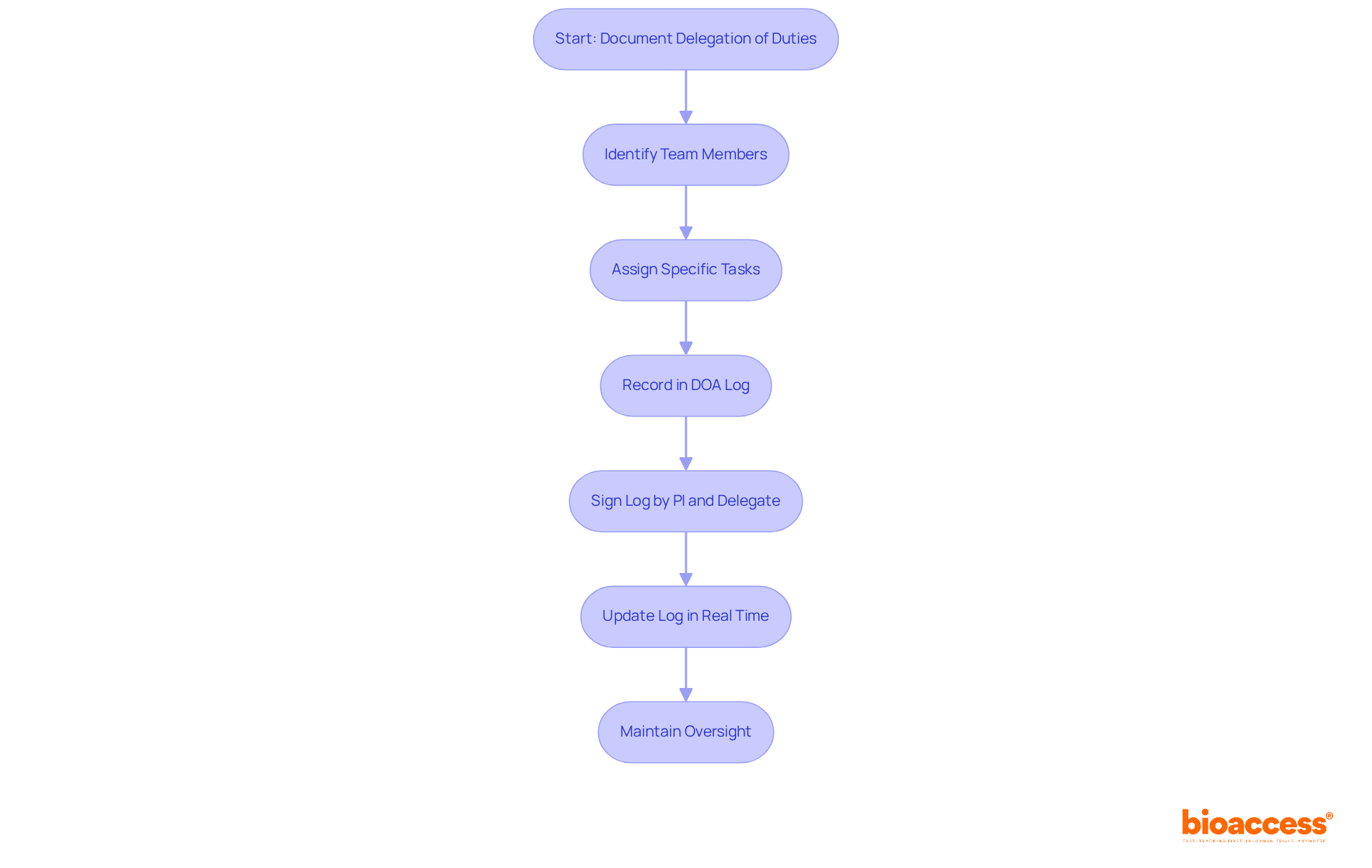
Thorough documentation of assigned responsibilities through investigator delegation and documentation is crucial for ensuring adherence and transparency in medical studies. A well-structured investigator delegation and documentation must detail the specific tasks assigned to each team member, including their names, delegated duties, and corresponding dates. For instance, if a study coordinator is tasked with patient recruitment, this responsibility should be explicitly recorded in the log. Both the Principal Investigator (PI) and the delegated individual involved in the investigator delegation and documentation should sign the log to confirm their agreement, reinforcing accountability. This practice not only aids in maintaining oversight but also serves as a vital reference during audits or inspections, ensuring that all tasks are executed by qualified personnel.
Regulatory bodies such as the FDA and EMA rely on the DOA Log and investigator delegation and documentation to verify task authorization and training, making it essential for protecting study integrity. Best practices in investigator delegation and documentation include ensuring that each delegated task aligns with the staff member's qualifications, maintaining original signatures, and updating the log in real time to reflect any personnel changes. Resources like the SCRS guidance on investigator delegation and documentation provide useful templates and insights for managing these essential records, ultimately enhancing adherence and operational efficiency in medical studies.
Bioaccess provides extensive trial management services, including:
This comprehensive approach ensures that all aspects of trials are meticulously managed, addressing key challenges in the Medtech landscape.
To uphold the highest standards in clinical research, it is imperative that all research personnel undergo comprehensive training and are qualified for their specific roles. This training encompasses initial education on Good Clinical Practice (GCP), strict adherence to study protocols, and compliance with relevant regulatory requirements. Regular training sessions are essential to keep staff updated on the latest industry standards and practices.
For example, personnel who engage with patients must be well-versed in informed consent processes and ethical considerations, which are vital for protecting participant rights and ensuring data integrity. Institutions must diligently maintain records of training completion and qualifications, as these are crucial for compliance and can be scrutinized during audits, particularly in relation to investigator delegation and documentation.
Utilizing resources such as NIH training programs can provide extensive training opportunities, enhancing the proficiency of project teams and ultimately improving study outcomes. Statistics indicate that effective GCP training correlates with higher quality in research execution, underscoring its significance in the research landscape.

Ongoing oversight and monitoring are crucial for the success of clinical studies, as they ensure participant safety and uphold data integrity. A well-defined monitoring plan is vital, outlining the frequency and methods of oversight - such as on-site visits, remote monitoring, and data audits. These strategies not only ensure compliance with study protocols but also facilitate the timely identification of issues.
Efficient communication channels among team members are essential for quickly reporting any issues that may arise during the experiment. By establishing a robust oversight framework, study teams can swiftly address potential problems, thereby protecting participant welfare and enhancing the reliability of outcomes. The FDA's revised guidelines on research oversight in 2026 underscore the significance of these practices, providing a solid foundation for creating effective monitoring plans.
Leaders in clinical research advocate for the implementation of comprehensive monitoring strategies, recognizing their profound impact on trial integrity and participant safety. As you consider your own clinical research challenges, reflect on how these strategies can enhance your studies and ensure the highest standards of participant care.

Establishing clear investigator roles and responsibilities is crucial for the success of clinical research. By defining these roles and implementing effective delegation and documentation practices, research teams can enhance accountability, streamline operations, and ensure compliance with regulatory standards. This clarity not only fosters efficient communication among team members but also safeguards participant welfare and data integrity throughout the study.
The article underscores several best practices, including:
Each of these elements plays a vital role in maintaining the integrity of clinical trials. Regular updates to delegation logs, adherence to Good Clinical Practice, and a robust monitoring framework are essential for addressing challenges and ensuring that all team members are equipped to fulfill their responsibilities effectively.
In conclusion, the significance of meticulous investigator delegation and documentation cannot be overstated. As clinical research continues to evolve, embracing these best practices will not only enhance study outcomes but also contribute to the overall advancement of the field. Stakeholders are urged to adopt these strategies, ensuring that high standards of safety and quality are upheld in every aspect of their research endeavors.
What are the main roles of investigators in clinical studies?
The main roles of investigators in clinical studies include the Principal Investigator (PI), who oversees the overall management of the study, and co-investigators, who may focus on specific aspects such as data collection or patient interaction.
Why is the investigator delegation and documentation log important?
The investigator delegation and documentation log is important because it specifies the tasks assigned to each individual, ensuring accountability and clarity within the research team.
What services does bioaccess provide for research study management?
Bioaccess provides services such as feasibility assessments, site selection, regulatory reviews, study setup, import permits, project management, and reporting to support effective onboarding and training of investigators.
How can research teams enhance communication and streamline operations?
Research teams can enhance communication and streamline operations by clearly delineating the roles and responsibilities of each investigator, which leads to more efficient study execution.
What is the significance of regular updates to the investigator delegation and documentation log?
Regular updates to the investigator delegation and documentation log are significant as they help maintain adherence to regulatory standards and prevent confusion or regulatory issues.
What potential pitfalls should investigators be aware of regarding delegation of authority?
Investigators should be aware of potential pitfalls such as failing to refresh the delegation of authority log, which can lead to confusion and regulatory issues.
What does Glenda Guest emphasize about investigator responsibilities?
Glenda Guest emphasizes that when tasks are delegated by an investigator, the investigator is responsible for providing adequate supervision of those to whom tasks are delegated, highlighting the need for meticulous oversight.