

In clinical research, the importance of robust post-trial site archiving Standard Operating Procedures (SOPs) is crucial, particularly in Bulgaria, where regulatory compliance is essential. Clear and effective SOPs not only uphold the integrity of vital study data but also bolster an organization’s reputation and operational efficiency. Yet, with regulations constantly evolving and the complexities of modern clinical trials, how can research entities effectively navigate the challenges of archiving while ensuring compliance and data security? This article explores best practices for creating and implementing post-trial site archiving SOPs, providing insights that can enhance archiving processes and protect valuable research outcomes.
To establish effective post-trial site archiving SOPs in Bulgaria, it’s crucial to define their purpose and scope clearly. These post-trial site archiving SOPs in Bulgaria should include detailed procedures for document retention, categorization, and storage methods, ensuring they are accessible to all team members. Regular updates are essential to reflect any changes in regulations or best practices. For instance, the SOP should specify that documents must be retained for a minimum of 25 years after the study's completion, in line with the MHRA's new guidelines.
Moreover, appointing a designated individual for archiving oversight clarifies responsibilities and ensures adherence to these procedures. Integrating a verification checklist that aligns with MHRA guidelines can simplify audits and inspections, guaranteeing that all critical study records, including the Master File (MF) and site files, are securely maintained in an unchangeable format. This proactive approach not only safeguards data integrity but also enhances organizational reputation and compliance with legal standards.
In the evolving Medtech landscape, the importance of robust SOPs cannot be overstated. They serve as a foundation for maintaining high standards in clinical research, addressing key challenges effectively. As you consider your own practices, reflect on how well your current procedures align with these guidelines and the potential benefits of implementing such structured approaches.

Familiarize yourself with the Bulgarian Drug Agency's guidelines and the EU Clinical Trials Regulation, which necessitates adherence to post-trial site archiving sops in Bulgaria, requiring that essential documents be archived for a minimum of five years after a trial's completion. This includes:
Regular evaluations of these regulations are crucial to uphold standards, as they may evolve over time. Have you considered how your archiving practices align with current requirements? Engaging with legal professionals or compliance affairs specialists can provide valuable insights to ensure you stay compliant.
Moreover, bioaccess offers extensive clinical study management services that address key challenges in the Medtech landscape. Their offerings include:
By partnering with bioaccess, you can ensure that your studies meet all regulatory requirements efficiently, allowing you to focus on what truly matters - advancing clinical research.
In summary, collaboration with experts in the field is essential for navigating the complexities of clinical trials. Take the next step to enhance your compliance and operational efficiency by leveraging the expertise of bioaccess.

Establishing a comprehensive development program is crucial for both onboarding new staff and providing ongoing education for existing team members in the clinical research field. This program should utilize a blend of workshops, e-learning modules, and practical experiences to thoroughly address standard operating procedures (SOPs) related to clinical trials, including site feasibility and investigator selection. By incorporating real-world scenarios and case studies, we can underscore the significance of compliance with regulatory requirements from ethics committees and health ministries.
Statistics reveal that 70% of firms experience delays in product launches due to validation problems. This highlights the essential need for efficient instruction to mitigate such risks. Regular assessments of the program's effectiveness through quizzes and feedback sessions will allow us to make necessary adjustments, addressing any identified knowledge gaps or misunderstandings. Furthermore, expert opinions emphasize that education must be conducted by qualified individuals to ensure adherence to current good manufacturing practices.
To enhance the training program further, conducting a training needs assessment is essential. This will tailor the content effectively and help avoid common pitfalls, ensuring that our team is well-equipped to navigate the complexities of the Medtech landscape. Collaboration and continuous improvement are key to overcoming the challenges in clinical research, and this program is a vital step in that direction.

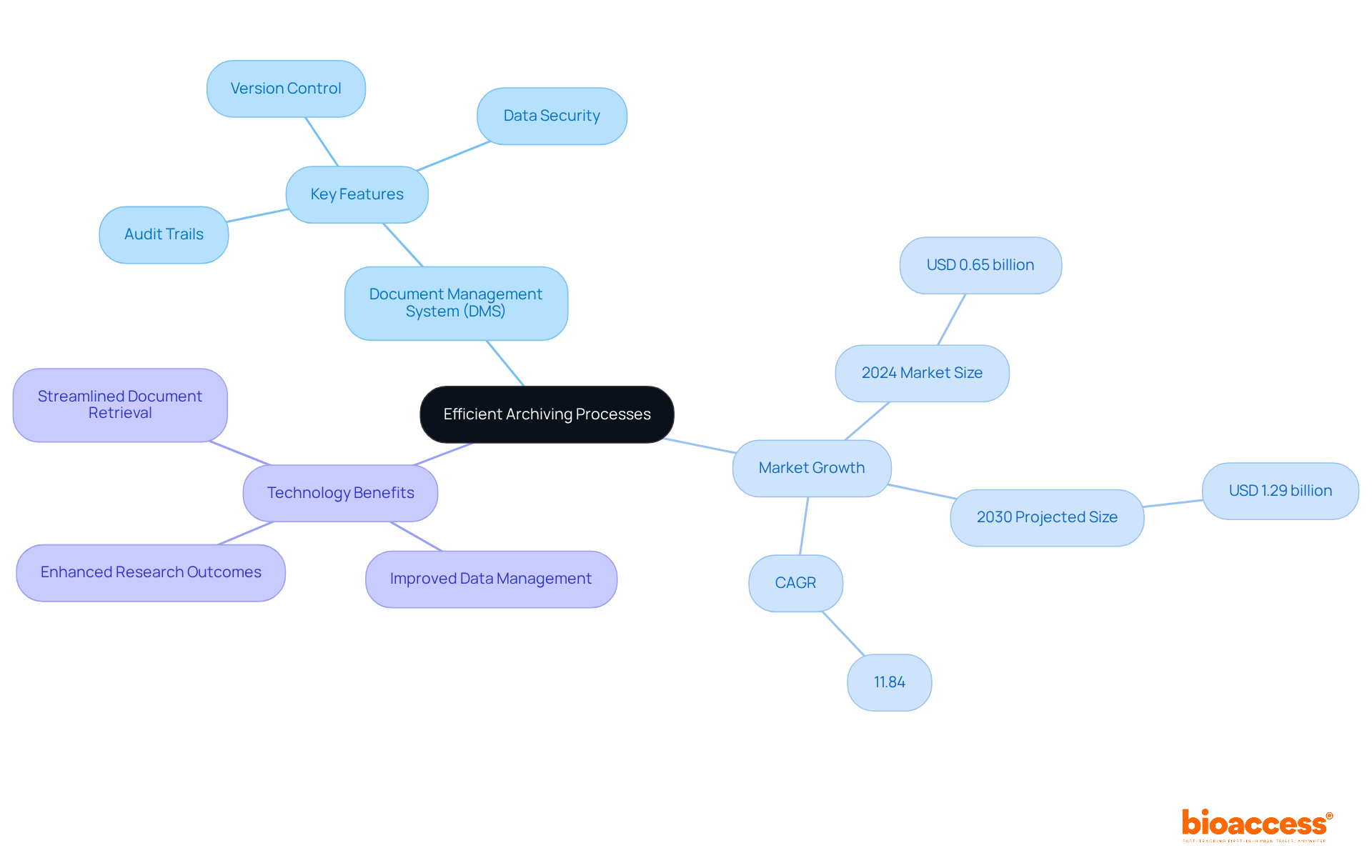
Implementing electronic archiving systems that comply with regulatory standards for data security and integrity is crucial in clinical research. A robust Document Management System (DMS) is essential for effectively categorizing, retrieving, and sharing archived documents. Key features such as audit trails and version control are necessary to ensure compliance with industry regulations. Regular data backups and security assessments are vital for safeguarding sensitive information.
The Global Medical Document Management Systems Market was estimated at USD 0.65 billion in 2024 and is projected to reach USD 1.29 billion by 2030. This growth reflects the increasing recognition of the need for streamlined document management in clinical research. The pandemic has further accelerated the adoption of cloud-based medical records, enabling remote access while ensuring secure data storage.
By leveraging these technologies, clinical research entities can optimize their archiving processes. This optimization leads to better data management and enhanced research outcomes. Are you ready to embrace these advancements and improve your document management strategies?
Establishing effective post-trial site archiving SOPs in Bulgaria is crucial for ensuring compliance, safeguarding data integrity, and enhancing organizational reputation in clinical research. By clearly defining procedures for document retention, categorization, and storage, organizations can streamline their archiving processes while maintaining adherence to regulatory requirements. This structured approach simplifies audits and inspections, reinforcing the importance of robust SOPs in navigating the complexities of the Medtech landscape.
Key insights from this article underscore the necessity of understanding Bulgarian regulatory requirements, implementing comprehensive training programs, and leveraging technology for efficient archiving. Familiarity with the guidelines set forth by the Bulgarian Drug Agency and the EU Clinical Trials Regulation is essential for ensuring that vital documents are retained appropriately. Moreover, investing in training programs can significantly reduce delays and enhance compliance, while adopting advanced document management systems optimizes data handling and security.
In conclusion, embracing these best practices is vital for any organization involved in clinical trials in Bulgaria. By prioritizing clear SOPs, continuous education, and innovative technology solutions, clinical research entities can position themselves for success in a rapidly evolving environment. Taking proactive steps today will not only ensure compliance with current regulations but also pave the way for improved research outcomes and a stronger reputation in the industry.
What is the purpose of establishing clear SOPs for post-trial site archiving in Bulgaria?
The purpose is to define procedures for document retention, categorization, and storage methods, ensuring accessibility for all team members and compliance with regulations.
What specific document retention period is mandated by the MHRA guidelines?
Documents must be retained for a minimum of 25 years after the study's completion, according to MHRA's new guidelines.
Who should be appointed for archiving oversight?
A designated individual should be appointed to clarify responsibilities and ensure adherence to the archiving procedures.
How can a verification checklist be beneficial for post-trial site archiving?
A verification checklist that aligns with MHRA guidelines can simplify audits and inspections, ensuring that all critical study records are securely maintained.
What types of records should be maintained in an unchangeable format?
Critical study records, including the Master File (MF) and site files, should be maintained in an unchangeable format to safeguard data integrity.
Why are robust SOPs important in the Medtech landscape?
Robust SOPs are essential for maintaining high standards in clinical research and effectively addressing key challenges in the evolving Medtech landscape.
What should organizations do to align their current practices with the recommended SOPs?
Organizations should reflect on their current procedures and consider the potential benefits of implementing structured approaches that align with the guidelines provided.