

Understanding the complexities of USP 61 microbial enumeration testing is crucial for ensuring product safety and regulatory compliance within the Medtech industry. This article explores best practices that clarify methodologies like Total Aerobic Microbial Count and Total Yeast and Mold Count, while also emphasizing the significance of strategic collaborations and technology integration. As the landscape of microbial testing evolves, organizations must ask themselves: how can they effectively adapt their quality assurance processes to meet these rigorous standards and protect consumer health?
The critical methodologies for testing the enumeration of non-sterile items are outlined in USP 61, specifically focusing on the Total Aerobic Microbial Count (TAMC) and Total Yeast and Mold Count (TYMC). These tests are vital for assessing the microbial load in products, ensuring they comply with safety standards before they reach consumers.
The techniques employed include:
Each technique is tailored for specific applications and varying levels of accuracy. Understanding these methodologies is essential for meeting regulatory standards and maintaining product quality.
In the Medtech landscape, the role of these testing methods cannot be overstated. They address key challenges in clinical research, reinforcing the need for rigorous quality control. As we navigate this complex environment, collaboration becomes paramount.
In summary, grasping the intricacies of USP 61 not only ensures compliance but also enhances the overall safety and efficacy of goods in the market. The next steps involve integrating these practices into your quality assurance processes.

Confirming the selected evaluation approach against the specific traits of the item is crucial for ensuring its appropriateness in clinical research. This process begins with preliminary tests that verify the method's ability to accurately retrieve microorganisms from the matrix. Effective compliance strategies must include:
By adopting a risk-oriented strategy, laboratories can prioritize items that necessitate more rigorous evaluation based on their intended application and potential hazards to consumers. This proactive approach not only enhances compliance but also safeguards item integrity and consumer safety.

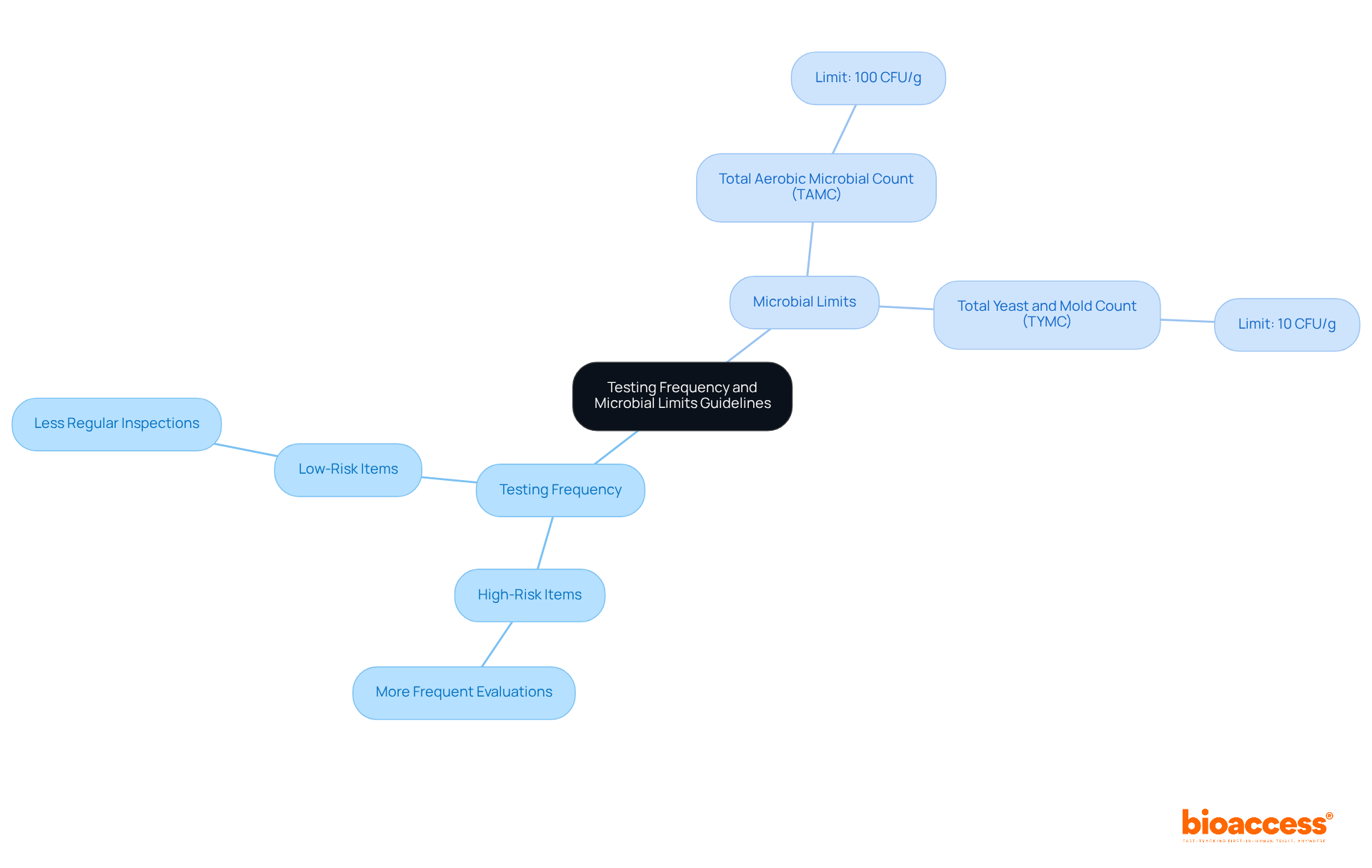
Determining the frequency of evaluations is crucial in clinical research, particularly when it comes to microbial contamination. The frequency should depend on the type of item, production methods, and historical data regarding contamination risks. For high-risk items, more frequent evaluations are essential, while lower-risk items may require less regular inspections.
Microbial limits must be clearly defined, adhering to regulatory guidelines and industry standards. Typically, non-sterile products allow for a maximum of 100 CFU/g for Total Aerobic Microbial Count (TAMC) and 10 CFU/g for Total Yeast and Mold Count (TYMC). Regularly reviewing these limits in light of new research and regulatory updates is vital for maintaining compliance and ensuring product safety.
In this ever-evolving Medtech landscape, staying informed and proactive about microbial evaluation is not just a recommendation; it's a necessity. How often are you reviewing your microbial limits? Ensuring that your practices align with the latest standards can significantly impact your research outcomes.
Partnering with certified laboratories significantly enhances the reliability of testing results related to microorganisms, particularly in the context of USP 61. This collaboration provides organizations with access to state-of-the-art methodologies and technologies that are crucial in today’s Medtech landscape. For instance, the integration of automation and advanced tools, such as real-time PCR and digital imaging, dramatically improves the speed and accuracy of organism counting.
Take the 7000RMS analyzer, for example. It records over 216,000 measurements in the time traditional methods require, delivering results every two seconds. This rapid data collection not only streamlines processes but also enables swift identification of contamination, facilitating informed decision-making that adheres to stringent regulatory standards. Furthermore, the 7000RMS can detect microorganisms as small as 0.3 µm and complies with USP <1223>, showcasing how innovation is transforming microbial examination practices and ultimately ensuring product quality and patient safety.
As Dr. Kevin Jace aptly noted, "Microbiological testing is evolving rapidly, revolutionizing disease detection, treatment plans, and public health strategies." This evolution underscores the critical role of collaboration in overcoming challenges in clinical research, paving the way for enhanced outcomes and safety.

Understanding and implementing effective practices for USP 61 microbial enumeration testing is crucial for ensuring product safety and compliance in the Medtech industry. By concentrating on methodologies like Total Aerobic Microbial Count (TAMC) and Total Yeast and Mold Count (TYMC), organizations can accurately assess microbial loads in non-sterile products. This not only safeguards consumer health but also meets regulatory expectations.
Las estrategias clave incluyen:
Moreover, leveraging advanced technologies and collaborating with certified laboratories significantly enhances the reliability and efficiency of microbial testing processes. These practices not only promote adherence to industry standards but also contribute to a robust quality assurance framework.
In a landscape where microbial safety is paramount, organizations must remain vigilant and proactive in their testing approaches. Regularly reviewing microbial limits, embracing innovative technologies, and fostering partnerships with laboratories can greatly improve testing outcomes. By prioritizing these best practices, stakeholders can ensure their products not only comply with current regulations but also uphold the highest standards of safety and efficacy for consumers.
What is the focus of USP 61 Microbial Enumeration Testing?
USP 61 focuses on the Total Aerobic Microbial Count (TAMC) and Total Yeast and Mold Count (TYMC) for testing the enumeration of non-sterile items.
Why are the tests outlined in USP 61 important?
These tests are vital for assessing the microbial load in products to ensure they comply with safety standards before reaching consumers.
What techniques are employed in USP 61 testing?
The techniques employed include Membrane Filtration, Plate Count, and Most Probable Number (MPN).
How do the testing techniques differ?
Each technique is tailored for specific applications and varying levels of accuracy.
What is the significance of these testing methods in the Medtech landscape?
These testing methods address key challenges in clinical research and reinforce the need for rigorous quality control.
What is the next step after understanding USP 61?
The next steps involve integrating the practices outlined in USP 61 into quality assurance processes to ensure compliance and enhance product safety and efficacy.