

Understanding the complexities of early access programs in Bosnia is crucial for navigating the intricate landscape of healthcare regulations. These programs not only grant vital access to experimental treatments for patients facing severe conditions but also significantly influence the future of medical research and practice. As the demand for these programs escalates, so do the challenges tied to their implementation and oversight.
What strategies can stakeholders adopt to ensure these programs remain effective and compliant with regulatory standards?
The early access programs regulation in Bosnia are vital systems that enable individuals with severe or life-threatening conditions to access experimental medications prior to full marketing approval. These programs serve as a crucial lifeline for those who have exhausted all available treatment options, offering potentially life-saving therapies. By facilitating access, expanded access programs bridge the gap between clinical trials and market availability, which is crucial for the early access programs regulation in Bosnia, allowing for the collection of real-world data that can inform future research and regulatory decisions.
The significance of these programs is underscored by their ability to provide timely access to innovative therapies, which can lead to improved outcomes for patients. For example, research indicates that employee assistance programs can enhance survival rates and quality of life for individuals facing serious health challenges. A notable case involved a young boy with a life-threatening adenovirus infection who gained access to an investigational drug through a social media campaign, highlighting the potential of expanded access programs to meet urgent medical needs.
Furthermore, the early access programs regulation in Bosnia plays a crucial role in the broader healthcare landscape by fostering collaboration among pharmaceutical companies, healthcare providers, and regulatory bodies. This collaboration not only bolsters the reputation of manufacturers but also cultivates trust within the community of patients receiving care. As awareness of clinical trials and investigational medications grows, the demand for expanded access programs continues to rise, making their role in improving health outcomes increasingly critical.
In the realm of clinical trial management, bioaccess provides comprehensive services, including feasibility studies, site selection, compliance reviews, trial setup, import permits, project management, and reporting. These capabilities ensure that employee assistance programs are executed efficiently, adhering to guidelines and enhancing patient access to innovative treatments. Additionally, understanding the role of oversight bodies like INVIMA in Colombia, which monitors medical devices and ensures compliance with health standards, is essential for navigating the complexities of expanded access programs and safeguarding the safety and efficacy of investigational therapies.

In Bosnia, the early access programs regulation in Bosnia is shaped by national legislation and aligns with European Union directives. Central to this framework is the Medicines Act, which outlines the necessary conditions for initiating EAPs. The Agency for Medicinal Products and Medical Devices of Bosnia and Herzegovina (ALMBIH) plays a crucial role in overseeing the approval and monitoring processes for these programs. Stakeholders must adhere to ethical guidelines and official mandates, including obtaining approvals from ethics committees and ensuring that patients provide informed consent.
A comprehensive understanding of the early access programs regulation in Bosnia is vital for effectively navigating the complexities associated with EAPs. Moreover, collaboration with national regulatory bodies and the World Health Organization (WHO) is essential for a robust strategy in biologics regulation, ultimately enhancing the efficiency of expanded access programs. Statistics reveal that the number of reported adverse drug reactions (ADRs) in Bosnia and Herzegovina is lower than in neighboring countries, indicating a need for continuous improvement in the pharmacovigilance system.
As emphasized by ALMBIH, building trust in the evaluation of biosimilars and the early access programs regulation in Bosnia is critical for improving access to innovative treatments. This trust not only fosters a more effective regulatory environment but also encourages stakeholders to engage actively in the development and implementation of these vital programs.

To implement successful Early Access Programs (EAPs), several key strategies should be prioritized:
Define Clear Objectives: Establish specific goals for the EAP, such as targeted enrollment numbers and the types of data to be collected. This clarity helps in measuring success and aligning efforts.
Engage stakeholders by collaborating with healthcare professionals, regulatory bodies, and advocacy organizations early in the process of early access programs regulation in Bosnia. Effective engagement guarantees that varied viewpoints are taken into account, improving the initiative's relevance and acceptability. Studies have shown that stakeholder involvement can significantly influence study planning and execution, leading to improved recruitment and enrollment rates.
Develop a Comprehensive Plan: Create a detailed operational framework for the EAP, covering aspects such as participant recruitment strategies, data collection methodologies, and monitoring processes. This plan should be flexible to incorporate input from stakeholders, which can refine and enhance its effectiveness.
Inform Individuals: Provide comprehensive information to individuals regarding the EAP, including potential risks and benefits. This education promotes informed decision-making and can enhance participant engagement and retention throughout the course.
Monitor compliance with the early access programs regulation in Bosnia by regularly assessing the program's adherence to regulatory requirements and ethical standards. Continuous monitoring not only maintains the integrity of the EAP but also builds trust among stakeholders and participants.
By applying these strategies, organizations can improve the feasibility and success of their Early Access Programs, ultimately resulting in better outcomes for individuals and more effective research.

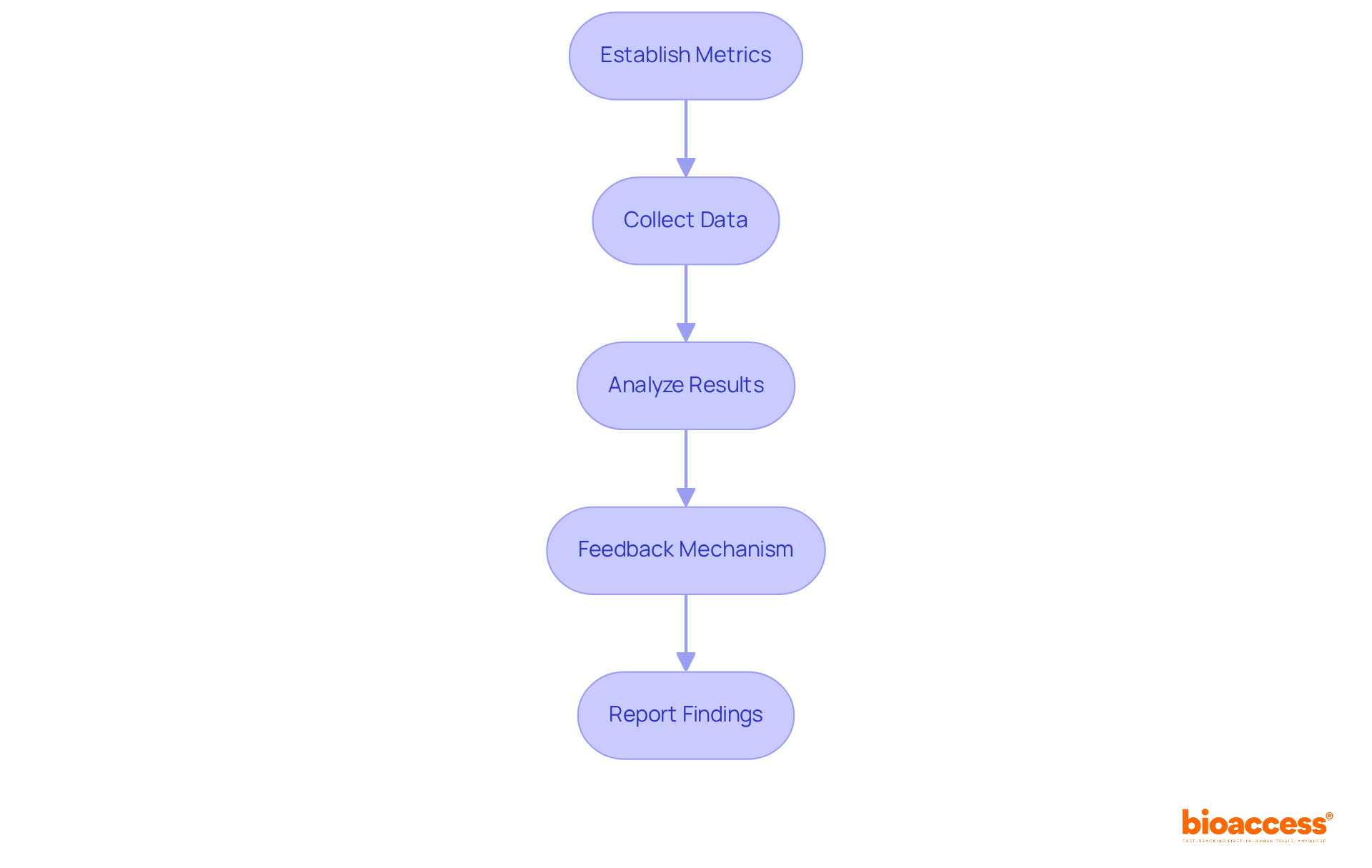
Monitoring and assessing the results of the early access programs regulation in Bosnia is crucial for ensuring their effectiveness and enhancing access to innovative treatments. This structured approach outlines the essential steps to achieve this goal:
Establish Metrics: Clearly define success metrics, such as survival rates, quality of life improvements, and adverse event reporting. These metrics provide a foundation for evaluating the initiative's impact on health outcomes.
Collect Data: Implement robust data collection methods to gather comprehensive information on patient outcomes, treatment efficacy, and safety. Utilizing real-world data (RWD) enhances the quality of insights derived from the initiative.
Analyze Results: Regularly analyze the collected data to identify trends, successes, and areas for improvement. This analysis is vital for understanding the initiative's effectiveness and making informed, data-driven decisions.
Feedback Mechanism: Establish a feedback loop with stakeholders, including healthcare providers and patients, to discuss findings and collaboratively make informed decisions about program adjustments. Engaging patients early can drive uptake and provide valuable insights into unmet needs.
Report Findings: Share the outcomes of the EAP with relevant stakeholders, including oversight organizations and the medical community. This transparency contributes to a broader understanding of the treatment's impact and supports future discussions regarding early access programs regulation in Bosnia.
By focusing on these key steps, organizations can effectively monitor and evaluate EAPs, ensuring they meet their objectives and ultimately improve patient access to necessary therapies.
The early access programs regulation in Bosnia stands as a crucial pathway for patients grappling with severe health challenges, providing them with access to innovative treatments prior to full market approval. These programs not only serve as an essential resource for individuals who have exhausted traditional options but also significantly enhance the overall healthcare landscape by fostering collaboration among various stakeholders.
Key insights throughout the article highlight the importance of:
Moreover, the necessity of monitoring and evaluating outcomes was underscored, demonstrating how these practices can lead to improved patient access and better health outcomes. The regulatory framework established by national legislation, along with the involvement of bodies like ALMBIH, reinforces the integrity and effectiveness of these programs.
Ultimately, the significance of early access programs in Bosnia cannot be overstated. They represent not merely a regulatory necessity but a lifeline for patients in urgent need of treatment. As awareness and demand for these programs continue to grow, it is imperative for all stakeholders to actively engage in their development and implementation. By doing so, the healthcare community can ensure that innovative therapies reach those who need them most, ultimately transforming lives and enhancing the quality of care in Bosnia.
What are early access programs and why are they important in Bosnia?
Early access programs in Bosnia are regulatory systems that allow individuals with severe or life-threatening conditions to access experimental medications before they receive full marketing approval. They are important because they provide a crucial lifeline for patients who have exhausted all available treatment options and offer potentially life-saving therapies.
How do early access programs benefit patients?
These programs facilitate access to innovative therapies that can lead to improved health outcomes for patients. They allow for the collection of real-world data that can inform future research and regulatory decisions, which is essential for developing new treatments.
Can you provide an example of how early access programs have helped a patient?
A notable case involved a young boy with a life-threatening adenovirus infection who gained access to an investigational drug through a social media campaign. This highlights how expanded access programs can meet urgent medical needs.
What role do early access programs play in the healthcare landscape?
They foster collaboration among pharmaceutical companies, healthcare providers, and regulatory bodies, which enhances the reputation of manufacturers and builds trust within the patient community. As awareness of clinical trials grows, the demand for these programs increases, making their role in improving health outcomes critical.
What services does bioaccess provide in relation to clinical trial management?
Bioaccess offers comprehensive services including feasibility studies, site selection, compliance reviews, trial setup, import permits, project management, and reporting. These services ensure that early access programs are executed efficiently and adhere to guidelines, enhancing patient access to innovative treatments.
Why is understanding oversight bodies like INVIMA important for expanded access programs?
Understanding oversight bodies such as INVIMA, which monitors medical devices and ensures compliance with health standards, is essential for navigating the complexities of expanded access programs. This knowledge helps safeguard the safety and efficacy of investigational therapies.